
The two harbours that give Banks Peninsula its shape are not really harbours at all. They are the drowned craters of old volcanoes, and on their inner slopes a handful of growers are quietly making wine. This is not a region with a cellar-door strip and a signposted trail – it is a scattered, stubborn little wine story told on the walls of a volcano, and it is one of the more unlikely things you can do with a Canterbury weekend.
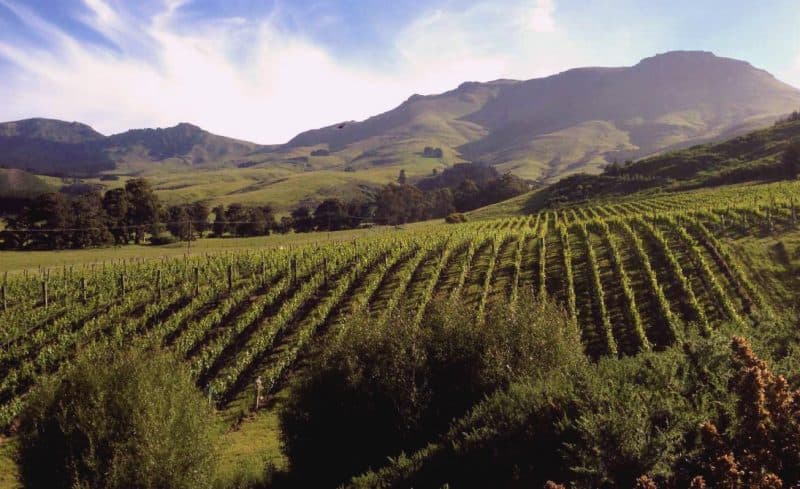
Drive over the hill from Christchurch and the land does something strange. The flat sprawl of the plains gives way to steep, folded green slopes that drop into two long arms of seawater – Lyttelton Harbour and Akaroa Harbour. Most people read those harbours as scenery. They are actually the insides of volcanoes.
Banks Peninsula is the worn-down remains of two large shield volcanoes that stopped erupting millions of years ago. The sea breached their flanks and flooded the hollows, so the harbours you sail and swim in are drowned volcanic craters. The vineyards here cling to the inner walls of those craters, which is a sentence you do not get to write about many places in New Zealand.
It is a small, scattered story rather than a wine region in the Waipara sense. There is no strip of cellar doors, no signposted trail. What there is instead is a handful of growers who looked at a volcano and decided it could make wine.
Aspect matters everywhere in cool-climate winemaking, but on the peninsula it does most of the work. We are a long way south here, and the difference between a slope that faces the sun and one that turns away from it is the difference between ripe fruit and fruit that never quite gets there.
The growers that have made a go of it sit on the north-facing inner slopes of the craters. Those faces catch the low southern sun through the day and hold the warmth, while the crater walls themselves shelter the vines from the worst of the wind coming off the open coast. It is a sun trap with a windbreak built in, which is roughly what you want when you are trying to ripen Pinot Noir at this latitude.
You notice it physically when you visit. Stand on one of these slopes on a clear autumn afternoon and the air is still and warm in a way the exposed tops never are.
Dig into one of these vineyards and you find volcanic soils sitting over a clay subsoil. That combination does two useful things at once.
The volcanic material on top tends to be free-draining and warms up readily, which suits vines – they like their roots in something that does not stay cold and waterlogged. Underneath, the clay holds onto moisture and feeds it back during a dry Canterbury summer, so the vines are not entirely at the mercy of the nor’wester. Growers here talk about this layering the way Waipara growers talk about limestone: it is the thing that makes the site worth the trouble.
None of this guarantees good wine – plenty of interesting geology produces forgettable bottles. But it explains why someone would plant on a slope this steep and this remote in the first place. The dirt is genuinely unusual.

On the Akaroa side, the vines sit inside the larger and more dramatic of the two craters. Takamatua Valley, the small Akaroa winery, works a site tucked into the hills just north of the township, where the valley funnels down toward the harbour. It is the kind of operation where the person pouring your glass may well be the person who pruned the vines.
Further round sits French Peak, planted on the old French Farm site on the western shore – a property with a long history of people trying to grow things on these slopes. Both are small. Neither is trying to be anything other than what it is: a peninsula vineyard making wine from a difficult, beautiful place.
A word of honesty before you load the car. Cellar-door access out here is not a given – some tastings are by appointment, some are seasonal, and a few quiet weeks can mean nobody is home. Treat these as places to discover rather than shops to drop into.
Cross to the Lyttelton crater and the mood shifts. The harbour is working water – container cranes, the ferry to Diamond Harbour, fishing boats – and the vineyards look down on all of it.
Whistling Buoy sits above the harbour on the Port Hills side, close enough to Christchurch that you can taste wine grown on a volcano and be back in the city for dinner. Caldera Estate wears its geology in its name – a caldera being the collapsed bowl of a volcano, which is more or less what you are standing in. The setting does half the talking here; there are not many tasting spots in the country where the view is a drowned crater full of ships.
The same caution applies as on the Akaroa side. Check ahead. These are not high-volume operations with the lights always on, and turning up unannounced on a Tuesday in winter is a good way to find a locked gate.
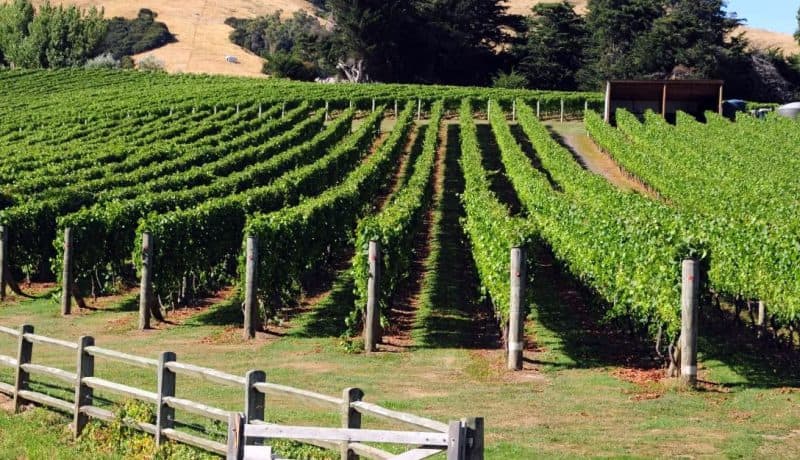
If the peninsula has flagship grapes, they are Pinot Noir and Chardonnay – the two varieties that reward a cool site with a warm aspect. That is not a coincidence. Both want a long, slow ripening season and a slope that catches enough sun to finish the job, which is exactly what those north-facing crater walls offer.
Pinot Noir in particular suits the peninsula’s logic. It is a grape that responds to site – to soil, to aspect, to the small differences between one slope and the next – and a volcanic sun trap above a harbour is about as specific a site as you can find. Chardonnay does well for similar reasons, holding its acidity in the cool air while still ripening on the warm faces.
We are not going to put words in the bottles’ mouths here – tasting notes for specific wines are best earned at the glass, not invented at a keyboard. But the pairing of variety and place makes obvious sense once you have stood on the dirt.
Alongside the two flagships, you will find the aromatic whites that Canterbury has always had a soft spot for. Riesling and Pinot Gris both turn up in peninsula plantings, and both make sense in a cool maritime climate that keeps acidity bright.
Canterbury and Riesling have a long-running affair – Waipara built much of its early reputation on it – and the peninsula sites carry that thread without trying to outdo the valley up north. Pinot Gris, meanwhile, is the easygoing one: forgiving to grow, broadly liked, and happy on these slopes.
The plantings are modest. Nobody out here is farming Riesling by the hectare. But the aromatic whites round out what a peninsula grower can offer, and they fit the cool, breezy character of the place.
It helps to place the peninsula against the Canterbury sites you already know. Drive an hour north and you reach Waipara Valley, the region’s recognised heart – warmer, drier, sheltered by the Teviotdale hills, and planted at a scale the peninsula will never match. Out on the plains, the vineyards are flat, open, and exposed to the full run of the nor’wester.
The crater vineyards are a different animal. They are maritime where Waipara is more continental, steep where the plains are flat, and tiny where both are commercial. The harbour moderates the temperature and the crater walls do the sheltering, so the growing conditions owe more to the sea than to the mountains. Even neighbouring Central Otago, the obvious cool-climate Pinot comparison, is a dry inland world away from these damp, salt-tinged slopes.
It is the same broad Canterbury wine story, in other words, told from an unusual corner of it.
You cannot separate the wine from the drive, and you should not try. Getting to these vineyards means climbing the Summit Road, where the seal narrows and the country opens up beneath you in long views down into the harbours.
The Akaroa run in particular is a proper journey – winding tar seal, the occasional stretch of gravel, sheep on the road, and a view around every second corner that makes you want to pull over. By the time you reach a cellar door you have already earned the glass. The landscape does the priming; the wine just confirms what the drive promised.
This is the part the practical guides tend to undersell. A tasting on the peninsula is not an errand you slot between two other things. It is a half-day at least, and the road is the reason.
Here is the honest version of the advice. The peninsula rewards planning, not spontaneity. Several of the cellar doors are appointment-only or open only in the warmer months, and a few are weekend-and-summer affairs that go quiet the rest of the year.
So before you point the car at the Summit Road, get in touch. Check what is open, book where you need to, and have a plan B – there is plenty else out here, from Akaroa itself to the bays and the walking tracks, if a tasting falls through. We would rather you arrived prepared and delighted than spontaneous and standing at a locked gate.
That small bit of forethought is the price of admission to one of the more unlikely things you can do with a Canterbury weekend: drink Pinot Noir grown inside a volcano, looking down at the sea that flooded it.
There are easier places to grow grapes than the inside of an eroded volcano forty minutes of winding seal from Christchurch. That difficulty is exactly the point. The peninsula’s growers did not end up here by accident, and the wine carries the logic of the place – the sun on the north faces, the clay holding moisture, the harbour keeping the worst of the wind off. Go and stand on one of those slopes before you decide what you think of the bottle.
Sophie Renwick
Wine Adventure
4 Comments
Lived in Christchurch my whole life and never once thought of the peninsula as wine country. Bookmarking this for spring.
Good to see the honest note about cellar doors being appointment-only. Does anyone know if Whistling Buoy is open over summer, or is it strictly by booking? Keen to do the Lyttelton side without a wasted trip.
Greer, from memory they had set tasting times in the warmer months but I’d still ring ahead to be sure – as the article says, turning up unannounced is a good way to find a locked gate. Worth it for that view over the harbour though.
Did the Akaroa run last autumn and you’ve nailed it – the drive really is half the point. We pulled over about four times on the Summit Road before we even got to a vineyard. Had no idea the harbours were actual craters until a mate explained it, makes you look at the whole place differently.