
Canterbury grows excellent Pinot Noir. Nobody disputes that. But if you spend enough time tasting in the Waipara Valley, a quieter argument starts to take shape – one that the winemakers themselves will make if you catch them at the right moment, usually halfway through a bottle of their own Riesling. The argument is this: Pinot Noir can be grown well in a dozen New Zealand regions, but Canterbury Riesling, shaped by limestone soils and a cool, slow growing season, has a character that genuinely cannot be replicated elsewhere in the country. It is the variety that belongs here, the one that tastes most completely of where it comes from.
Canterbury sits on some of the most interesting geology in New Zealand wine, and most drinkers have no idea. The Waipara Valley runs through a band of limestone that surfaces as pale outcrops above the river terraces – the same kind of calcium-rich bedrock that underpins the great Riesling vineyards of Alsace, the Mosel, and parts of the Clare Valley. This is not a marketing comparison. The connection is literal and measurable in the wine.
Limestone does something specific to Riesling. It gives the vine access to calcium and trace minerals while maintaining good drainage, and it imparts a particular mineral signature that shows up in the glass as a flinty, almost chalky texture on the finish. Pour a Waipara Riesling next to a Marlborough Riesling and the difference is immediate – the Waipara wine has a stony, almost savoury undertone where the Marlborough version leans tropical and soft.
Not every vineyard in the valley sits on limestone. The valley floor is predominantly alluvial gravel, and the southern end trends toward clay. The producers who have planted Riesling on the limestone terraces and slopes – particularly on the western side of the valley – are the ones making the most distinctive wines. They know exactly what they are sitting on, and they will tell you about it in detail if you ask at the cellar door.
Riesling is a cool-climate variety that rewards patience, and Canterbury has patience built into its weather. The growing season here is long and slow, with warm days and genuinely cold nights – what the textbooks call diurnal temperature variation and what locals call reaching for a jersey at six in the evening even in February. That temperature swing is the engine of good Riesling.
During the day, the grapes accumulate sugar and develop flavour. At night, the cold air preserves the natural acidity that gives Riesling its spine and its ability to age. In warmer regions, that acidity drops away and you end up with flabby, one-dimensional Riesling that has nothing to say. Canterbury does not have that problem. If anything, the challenge is getting enough warmth to ripen fully – which is why the best Riesling sites are on sheltered north-facing slopes where the nor’wester funnels warm air through the valley.
The result is Riesling with genuine tension between ripe fruit and sharp acid. At its best, a Canterbury Riesling feels like it is vibrating slightly on your palate – a taut, energetic wine that keeps pulling you back for another sip. Pinot Noir can do well here too, but it fights the climate harder. Riesling just fits.
Ask someone to describe Riesling and you will hear “citrus and floral” on repeat. That is about as useful as describing all red wine as “berry flavoured.” Canterbury Riesling has a specific character that sets it apart, and it is worth learning to recognise.
Young Canterbury Riesling typically opens with lime zest – not the sweet lime of cordial but the sharp, almost bitter edge of fresh zest rubbed between your fingers. Behind that sits white-fleshed stone fruit – nectarine and greengage rather than peach. The floral notes are restrained: more blossom than perfume, and often closer to something herbal like chamomile than the jasmine you get from warmer-climate Riesling.
The mineral character is where Canterbury announces itself. There is a chalky, almost salty quality on the mid-palate that you do not find in Marlborough or Nelson Riesling. Some people describe it as wet stone. Others taste something closer to crushed shell. Whatever you call it, it gives the wine structure and persistence – the finish keeps going after you have swallowed.
With a few years in bottle, the lime shifts toward marmalade and the mineral note becomes more pronounced. Old Canterbury Riesling can develop a honeyed, kerosene-edged complexity that surprises people who thought Riesling was a drink-young variety. It is not. Not here.
Black Estate makes Riesling the way some people make arguments – stripped of anything unnecessary until only the essential point remains. Their dry Riesling typically finishes with less than two grams per litre of residual sugar, which in practice means your palate registers no sweetness at all. What you get instead is pure limestone minerality, tight citrus, and a finish that is almost austere.
This is polarising wine. People who grew up on Marlborough Sauvignon Blanc sometimes find Black Estate Riesling confusing – where is the fruit? It is there, but it is woven into the texture rather than shouting from the glass. Lime, green apple, a hint of something almost savoury like fresh almond. The wine asks you to pay attention, and it rewards you if you do.
Their Home vineyard sits on the limestone ridge above the Waipara River, and you can taste the site in every glass. The cellar door is one of the most architecturally striking in the valley – all dark timber and concrete, cantilevered over the hillside – and their kitchen serves food that makes sense with the wines. Order the dry Riesling with whatever salad they are running that week. The combination usually makes the wine click for people who were not sure about it on its own.
Greystone is the producer that most clearly demonstrates what Waipara limestone does to Riesling. Their vineyard occupies a north-facing slope of fractured limestone on the western side of the valley, and winemaker Dom Maxwell has been refining his approach to Riesling here for over a decade. The result is wine that tastes like the ground it comes from.
The current-release Riesling is technically dry but has a thread of residual sugar – usually around five or six grams per litre – that gives it a slightly rounder texture than Black Estate without tipping into obvious sweetness. The acid is high enough to keep everything taut. You taste lime curd, white pepper, wet river stone, and a persistent chalky grip on the finish that makes you want another sip before you have quite finished thinking about the last one.
What makes Greystone Riesling particularly interesting is how it ages. Their wines develop that classic Riesling petrol note – the slightly kerosene-like character that sounds off-putting until you actually taste it in context – earlier than most New Zealand Rieslings. A five-year-old Greystone Riesling is a genuinely different wine from the current vintage, more honeyed and complex but still structured. If you visit the cellar door, ask if they have any back vintages open. They sometimes do, and the comparison is educational.
Bone Line does not have a cellar door, does not have a tasting room, and does not have much of a public profile outside Canterbury. What it has is very good Riesling from the northern end of the Waipara Valley, where the limestone gives way to slightly different soils and the wines take on a character that sits apart from the more famous producers further south.
The Riesling here is lean and nervy – less generous than Pegasus Bay, less austere than Black Estate, occupying a middle ground that feels distinctly its own. The fruit profile leans toward Granny Smith apple and grapefruit rather than lime, with a faint herbal quality – almost like dried thyme – that shows up on the nose and follows through to the palate. The finish is clean and dry, with moderate length.
You find Bone Line wines in a handful of Christchurch bottle shops and restaurants, and occasionally at farmers markets. The production is small enough that they sell out most vintages without needing to market aggressively. For Riesling drinkers who enjoy the variety in its most understated form – no sweetness, no showmanship, just well-made wine from a good site – Bone Line is worth seeking out. It is also consistently one of the more affordable Waipara Rieslings, which does not hurt.
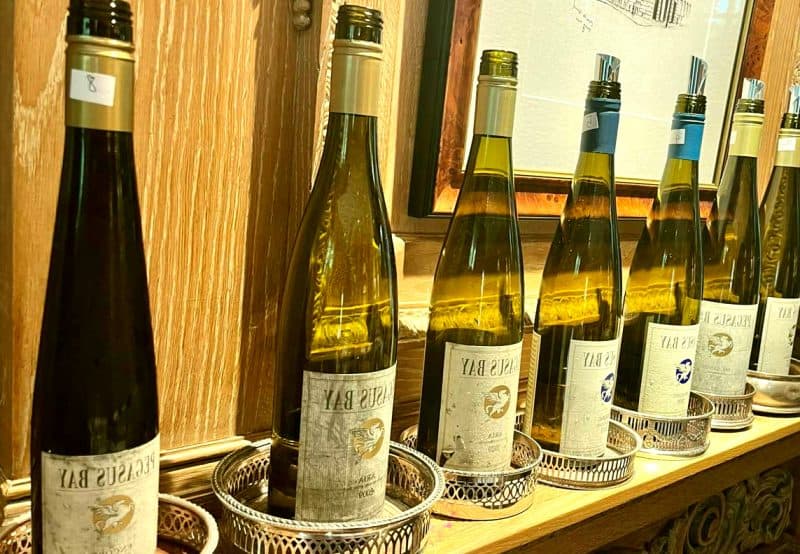
Pegasus Bay has been making Riesling in Waipara since the late 1980s, which makes them one of the longest-running Riesling programmes in Canterbury. Their approach sits at the opposite end of the spectrum from Black Estate: where Black Estate strips Riesling back to bone, Pegasus Bay builds it up with carefully managed sweetness that gives the wine generosity and richness without losing its cool-climate nerve.
Their standard Riesling typically carries around 15 to 20 grams of residual sugar – solidly off-dry, but balanced by acid levels high enough that the wine does not taste sweet in the way a dessert wine does. Instead, it tastes lush. The fruit is riper and more generous: think yellow peach, apricot, a squeeze of mandarin, with the floral lift turned up compared to the drier end of the valley. The limestone mineral note is still there, but it sits underneath the fruit rather than leading the charge.
This style divides opinion among wine people, which is a reliable sign that it is doing something interesting. Some drinkers find it too rich for a Riesling. Others find it more approachable and food-friendly than the bone-dry versions. The truth is that both styles are legitimate expressions of what Waipara can do with this grape – and tasting them side by side is one of the best arguments for visiting the valley in person.
Most years, a handful of Waipara producers make late-harvest Riesling, and in the right vintage, botrytis arrives and transforms the grape into something altogether different. Pegasus Bay’s Encore and Finale bottlings are the most well-known, but Greystone and others have released botrytis-affected Riesling when conditions allow.
Botrytis – noble rot – is a fungus that shrivels the grape on the vine, concentrating sugars and acids while adding its own distinctive flavour compounds: ginger, saffron, dried apricot, marmalade. It only develops properly in very specific weather conditions, which is why botrytis wines cannot be made every year and why they carry higher price tags when they appear. In Waipara, autumn mornings that bring mist off the river followed by warm, dry afternoons create the right environment. When it works, the wines are extraordinary – intensely sweet but lifted by Canterbury’s signature acidity so they never feel cloying.
These are not everyday wines. A half bottle of Pegasus Bay Finale will cost you as much as two full bottles of their standard Riesling, and the production quantities are tiny. But if you see one on a restaurant list or at the cellar door, it is worth trying even a small glass. Botrytis Riesling from Waipara is one of Canterbury’s genuine luxury products, and it gives you a glimpse of what this valley is capable of at its absolute peak.
Riesling is the only major grape variety where you genuinely need to understand the sweetness spectrum before you buy, and the labelling does not always help. Here is what the terms mean in practice, with the numbers that sit behind them.
Dry means less than about 9 grams of residual sugar per litre, though many Canterbury dry Rieslings come in well under 5. At these levels, your palate registers no sweetness – the wine tastes crisp, mineral, and citrus-driven. Black Estate and Bone Line sit here. Off-dry runs from roughly 10 to 25 grams per litre. This is where Pegasus Bay’s standard Riesling lives. You can taste a hint of sweetness, but high acidity keeps it balanced – the wine does not taste sugary. Medium covers 25 to 45 grams, a category that New Zealand producers rarely label as such, preferring the more appealing “off-dry.” Sweet and late harvest wines start above 45 grams and can reach well over 100 in a botrytis vintage.
The catch is that perceived sweetness depends on acidity as much as sugar. A Riesling with 20 grams of sugar and 10 grams of acid will taste drier than one with 15 grams of sugar and 6 grams of acid. This is why Canterbury Rieslings with measurable residual sugar can still taste refreshing and food-friendly – the cool climate preserves enough acid to carry the sweetness. If a label says “dry” in Canterbury, trust it. If it says nothing, check the back label for technical data or ask at the cellar door.
Most New Zealand white wine is built to drink young, and most of it should be. Canterbury Riesling is the exception. The combination of high natural acidity, moderate alcohol, and that limestone mineral backbone gives these wines a structure that not only survives ageing but genuinely improves with it.
A three-year-old Canterbury Riesling starts to soften its citrus edges and develop a richer, more honeyed character. The lime zest shifts toward preserved lemon. The mineral note becomes more integrated – less a separate flavour and more part of the wine’s overall texture. A five to eight-year-old bottle, if it has been stored properly, can show the classic Riesling development character: toast, beeswax, a faint whiff of kerosene that sounds unappealing but is actually fascinating in context. The acid is still there, holding everything together.
The sweet end ages even longer. A good Pegasus Bay Encore from a strong vintage can develop for a decade or more, gaining complexity that makes the young version look like a rough sketch. The problem is finding old Canterbury Riesling to buy – production is small, most of it is drunk young, and the producers rarely hold back stock for library release. Your best bet is to buy current vintages you enjoy and put a few bottles away yourself. A proper wine fridge is not strictly necessary if you have a cool, dark cupboard that stays below about fifteen degrees.
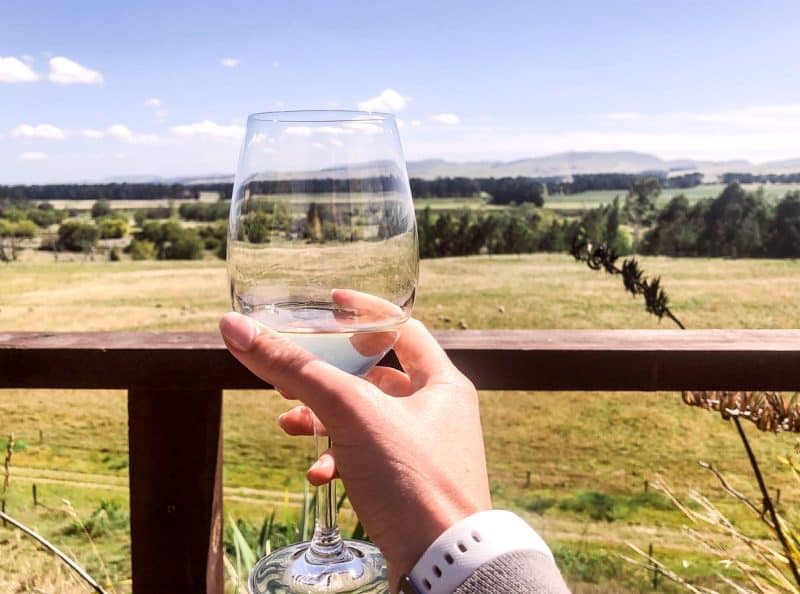
If you want to taste across the Riesling spectrum in a single day, Waipara makes it straightforward. The valley is compact enough that the key producers are within fifteen minutes of each other, and a focused circuit of three or four stops gives you a proper education without exhausting your palate or your designated driver.
Start at Black Estate on the Omihi saddle road. Their dry Riesling is the clearest expression of what zero residual sugar tastes like from limestone soil, and the cellar door setting – perched above the valley with views north toward the hills – puts you in the right frame of mind. From there, drive south to Greystone on the western side of the valley. Their Riesling sits slightly rounder than Black Estate’s, and the side-by-side comparison in your memory is worth more than any tasting note.
Finish at Pegasus Bay on Stockgrove Road for the off-dry and sweet end of the spectrum. Their cellar door is the most established in the valley, the grounds are beautiful, and they usually have their full Riesling range available including any late-harvest or botrytis wines from recent vintages. If the restaurant is open, book a table – the food programme here is serious and the Riesling pairings are excellent. Three stops, three styles, and a solid understanding of what Canterbury does with this grape.
Riesling is one of the most food-versatile white wines in the world, and Canterbury versions are no exception. The key is matching the sweetness level of the wine to the weight and flavour intensity of the food – dry Riesling with lighter dishes, off-dry with richer or spicier ones.
Dry Canterbury Riesling is superb with fresh seafood – particularly Kaikoura crayfish, Akaroa salmon, or simply grilled white fish with a lemon and herb dressing. The wine’s acidity cuts through richness and its mineral edge complements the brininess of shellfish. It also works beautifully with goat cheese, green salads with citrus dressings, and anything involving fresh herbs. The Black Estate cellar door kitchen demonstrates this pairing style better than any list of suggestions can.
Off-dry Riesling opens up a different set of matches. The residual sugar handles chilli heat and aromatic spice without flinching – Thai green curry, fragrant Vietnamese pho, or a good Canterbury pork belly with Asian-inspired glaze all work well. This is where Pegasus Bay’s Riesling earns its keep at the dinner table. The sweetness bridges the gap between the wine and bold flavours that would flatten a dry white.
For late-harvest and botrytis Riesling, think blue cheese, fruit-based desserts, or simply a plate of ripe stonefruit at the end of a summer meal. These wines are rich enough to stand alone as dessert, but they genuinely improve with the right food beside them.
Every vintage shifts the rankings slightly, but these are the Canterbury Rieslings we keep coming back to and the ones we recommend when someone asks what to buy.
For bone-dry Riesling, the Black Estate Home Vineyard is the benchmark. It captures the limestone character of the Omihi saddle in its purest form – tight, mineral, persistent. If you can find Bone Line’s Riesling, it offers a different angle on the same dry style at a gentler price. Both reward a year or two of cellaring but drink well on release if you give them half an hour to open up in the glass.
In the off-dry category, Pegasus Bay’s standard Riesling is hard to argue with. The balance of ripe fruit, natural sweetness, and vibrant acidity is something they have refined over thirty-plus vintages and it remains one of the most complete Rieslings in New Zealand. Greystone’s Riesling falls between dry and off-dry and appeals to drinkers who want texture without overt sweetness – it is our pick for the single Canterbury Riesling to drink if you are trying to understand what the fuss is about.
For a special occasion, look for Pegasus Bay Encore or Finale from a recent vintage. Production is tiny, prices are higher, and the wines are extraordinary. They will cellar for a decade if you have the discipline. We usually do not.
Canterbury will keep making good Pinot Noir, and the rest of New Zealand will keep paying attention to it. But Riesling is the quieter achievement – the variety that fits the region so naturally that you wonder why it took so long for anyone to notice. From Black Estate’s austere, limestone-driven dry wines to Pegasus Bay’s generous off-dry bottlings and the occasional botrytis masterpiece, the range of what Waipara produces from a single grape variety is remarkable. The best way to understand it is to taste across the spectrum yourself, preferably in the valley, preferably with lunch involved. You will not need convincing after that.
Sophie Renwick
Wine Adventure
Leave a comment