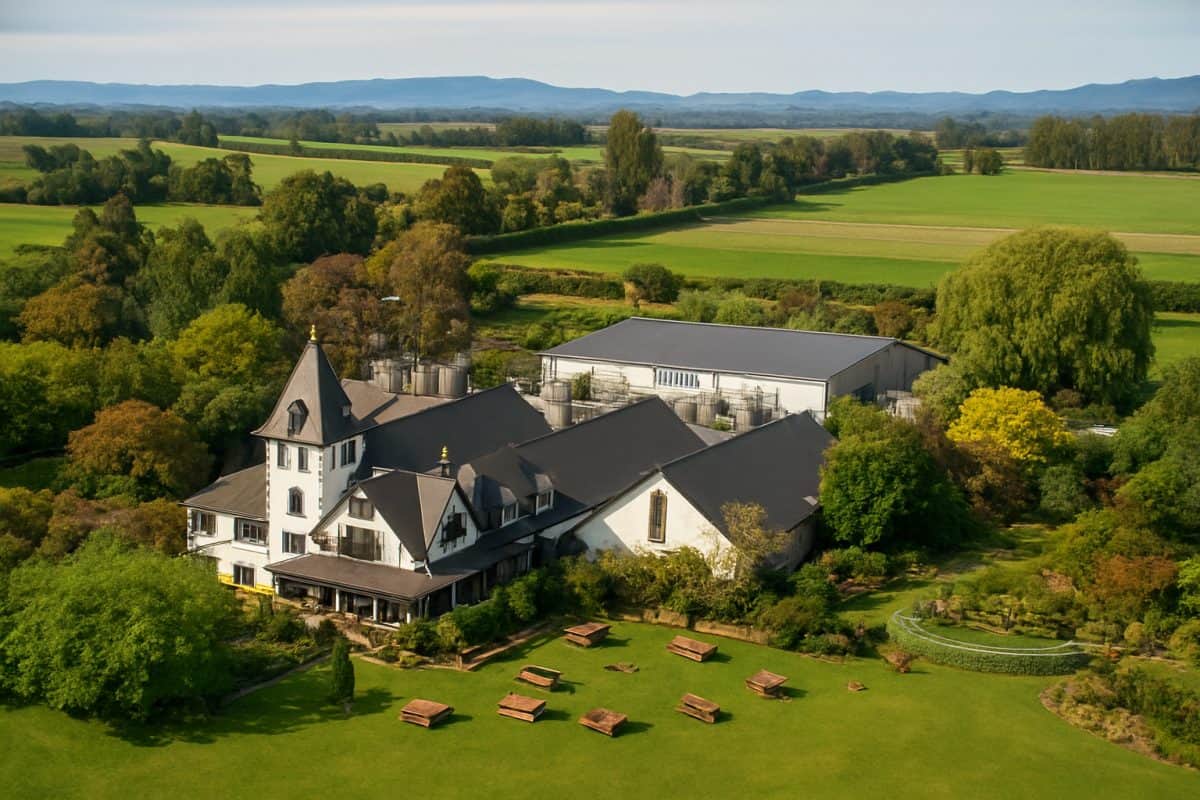
Pegasus Bay has been making wine in the Waipara Valley since 1985, back when the valley was better known for sheep than Riesling. Three decades later, the Donaldson family is still here — still holding wines back from release until they are actually ready, still keeping a full-time gardener, still refusing to rush. This is what you find when you visit a place that has been doing things its own way for longer than most Canterbury wineries have existed.
You turn off State Highway 1 at Waipara and the valley opens like someone pulling back curtains. The road follows the river, limestone bluffs rising on both sides — pale, crumbling, old in a way that makes the vineyards below them look like a recent thought. The nor’wester funnels down from the hills and hits those bluffs, creating a sheltered pocket that Waipara growers talk about the way sailors talk about a good harbour.
Pegasus Bay sits on the valley floor where the afternoon sun pools. The driveway is long enough that you start to wonder if you missed a turn, which is probably intentional. By the time you reach the car park, you have already passed through enough landscape to reset whatever pace you arrived with. The Teviotdale hills frame everything to the north. The sky here feels wider than it should, given how close you are to Christchurch.
There is nothing rushed about the approach. The vines on either side of the drive are mature — thick trunks, low canopy, the kind of root structure that only thirty years of growing in the same patch of gravelly clay can produce.
The winery building is not trying to win an architecture award. It is solid, timber-framed, with a pitched roof and a courtyard that catches the morning sun. Ivy has crept across enough of the facade that you cannot tell where the building ends and the garden begins, which feels like the point.
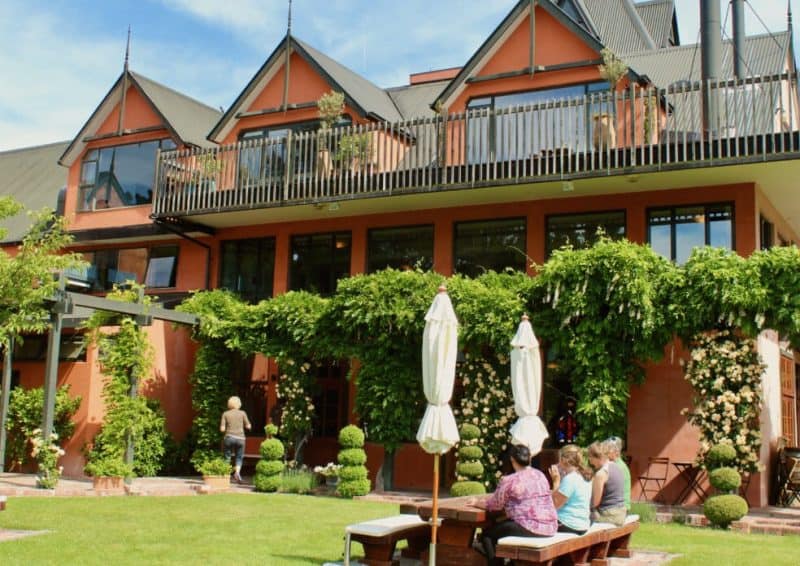
There is a covered terrace with heavy wooden tables, the kind that have hosted several thousand lunches and show it in the best possible way. Inside, the tasting room is panelled in native timber — rimu, by the look of it — and the ceilings are high enough that sound does not bounce. The effect is more library than cellar door.
Bottles line the shelves in a way that suggests collection rather than retail display. Someone has put thought into the lighting without making it obvious. You get the sense that the Donaldsons built this place expecting to be here for decades. Not a pop-up, not a venture capital project, not a brand exercise. Just a building designed to age as well as the wine inside it.
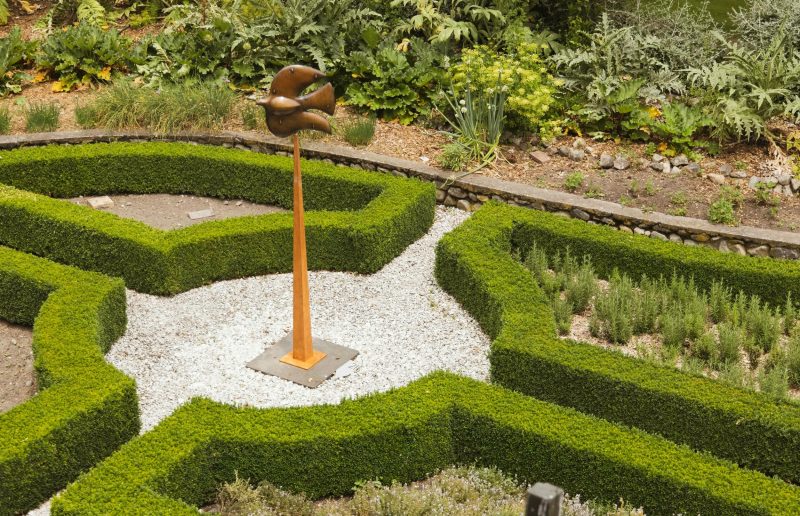
Most wineries have a garden the way most offices have a pot plant — functional, minimal, occasionally watered. Pegasus Bay keeps a full-time gardener and it shows. The kitchen garden alone runs to several hundred square metres of herbs, edible flowers, and seasonal vegetables that walk straight from the soil to the restaurant kitchen next door.
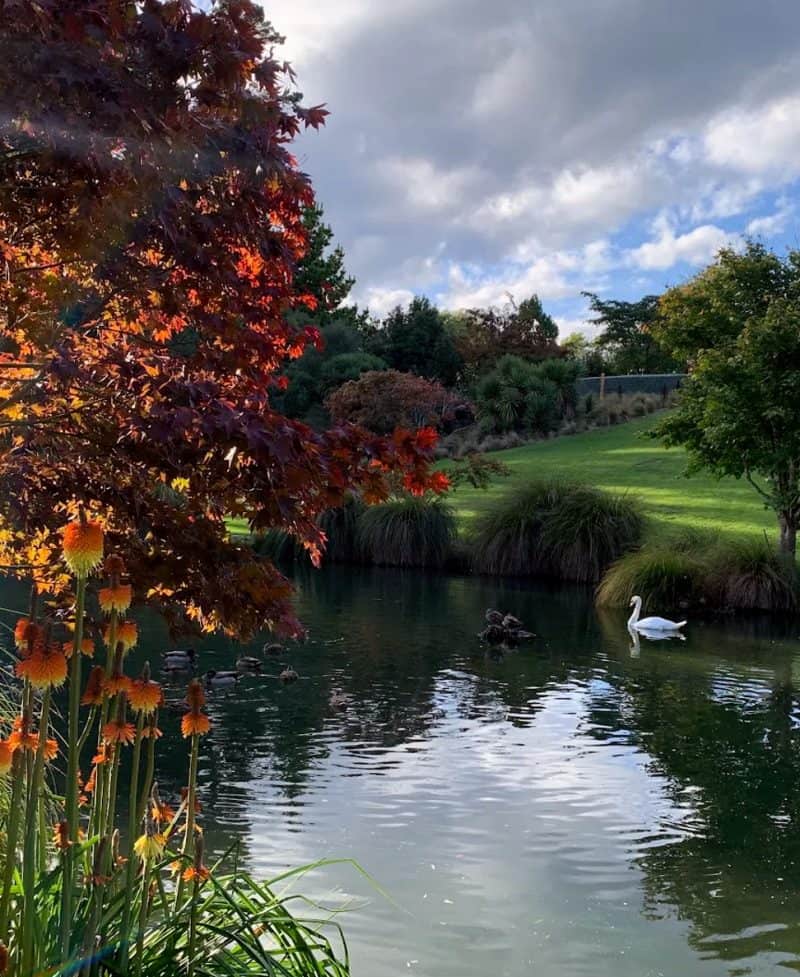
Beyond the kitchen garden, the ornamental plantings are dense and layered. Roses, lavender, old-growth trees that predate the winery by decades. Native flax and cabbage trees along the pond edges. The whole property feels like it was planted by someone who understood that a vineyard is a monoculture and a garden is the antidote.
The Donaldson family has always treated the grounds as part of the product. You are not just buying a bottle of Riesling — you are buying the philosophy that produced it. The gardens are the visible expression of the patience that goes into every bottle they release. It is not decoration. It is evidence.
Before you taste anything, walk. The property rewards a slow circuit. Past the kitchen garden, a path leads down to a pond where ducks conduct their own business with admirable focus. Beyond that, the natural amphitheatre where Pegasus Bay hosts summer concerts — Opera in the Vineyard has been running here for years, and the acoustics off the limestone are genuinely good, not just good-for-a-vineyard.
There are sculptures placed through the gardens with enough restraint that you find them rather than having them announced. The whole circuit takes about twenty minutes if you are not stopping to read plant labels or watch a fantail work the hedge line. It takes longer if you are.
The point of the walk is not exercise. It is calibration. By the time you circle back to the tasting room, your breathing has slowed and your palate is ready for something that was made without hurry.
Most New Zealand wineries release their wines within a year or two of vintage. Pegasus Bay holds theirs back, sometimes for years, and the aged Riesling programme is where this philosophy is most visible. The current release of their Bel Canto Riesling might be five or six years old. The library releases go back further — a decade or more of Waipara Riesling, sitting in temperature-controlled storage, developing.
What happens to Riesling with that kind of time is difficult to describe without sounding like a perfume advertisement. The citrus softens into something closer to marmalade. Honey appears, but dry honey — if that makes sense. A kerosene note that sounds alarming but is actually what Riesling enthusiasts spend years chasing. The acid stays. That is the important part. Waipara Riesling has enough spine to age without collapsing into sweetness.
You can taste multiple vintages side by side at the cellar door if you ask. This is the single best education in wine ageing available in Canterbury, and it costs less than a textbook.
The Riesling gets the attention, but Pegasus Bay makes a Pinot Noir that deserves its own conversation. Waipara Pinot tends toward the darker end of the spectrum — less of the bright cherry you get from Central Otago, more plum skin and dried herb. The valley’s warm days and cool nights produce fruit with concentration but without the jamminess that creeps into warmer regions.
Then there is the Prima Donna, their botrytised Riesling dessert wine that appears only in vintages where the noble rot cooperates. It is absurdly rich — apricot, ginger, a viscosity that coats the glass — but the acid cuts through it like a cold wind through a warm room. Not every year produces a Prima Donna, which is part of what makes it worth seeking out.
The Maestro is their Bordeaux-style red blend, Merlot and Cabernet in proportions that shift with the vintage. The Finale is their noble Semillon. The portfolio is broader than most visitors expect from a single Canterbury estate, and every bottle carries the same stubborn insistence on releasing only when the wine says it is ready.
Ivan Donaldson was an associate professor of neurology at the University of Canterbury when he planted his first vines in 1985. Waipara was not a wine region then — it was a farming valley with a few orchards and a lot of sheep. The idea of growing grapes there would have seemed optimistic at best.
But Donaldson had the kind of methodical patience that comes from a career in medical research. He studied the soils — the free-draining gravels over clay, the limestone influence on pH. He studied the mesoclimate, the way the valley funnelled warm air from the plains while the hills blocked the worst of the easterly rain. He planted varieties that suited the data, not the fashion.
The first commercial vintage came in 1991. By then, a handful of other producers had started planting in the Waipara Valley, but Pegasus Bay had the head start and, more importantly, the records. Thirty years of vine data from the same site is rare anywhere in New Zealand. Ivan kept notes the way a researcher keeps notes — detailed, dated, sceptical of his own conclusions.
Matthew Donaldson took over winemaking. Edward handles the viticulture. The transition was not a corporate succession plan — it was more like a conversation that lasted a decade. Ivan remained involved, offering the kind of counsel that comes from someone who has watched the same vines grow through thirty vintages of drought, frost, and the occasional Canterbury earthquake.
What the generational shift has brought is a willingness to experiment within the established framework. New clones in the vineyard. Different oak regimes in the cellar. A Chardonnay that has evolved noticeably over the last ten years — more restrained, less reliant on malolactic richness. But the core philosophy has not moved. Hold the wine. Release it when it is ready. Do not chase trends.
There is something rare about a family operation where the founders are still alive and the next generation is already running the show. The wines carry a continuity that single-generation estates cannot replicate. You taste the 2012 and the 2022 side by side and they are clearly from the same place, the same thinking, but the newer vintage has a confidence that comes from knowing the earlier one turned out well.
The cellar door at Pegasus Bay does not operate on a timer. There is no laminated card telling you to swirl, sniff, and move along. The staff are knowledgeable in the way that comes from having worked multiple vintages themselves — they can tell you about the 2019 growing season because they remember it, not because they read the tech sheet that morning.
A standard tasting runs through five or six wines, starting with the Bel Canto dry Riesling and working through to the Pinot Noir or the Maestro. If you show genuine interest, they will open something from the library. This is not upselling — it is enthusiasm, and the distinction matters.
The tasting fee is modest by Canterbury standards and waived with purchase, which is the kind of policy that suggests the estate wants you to taste properly rather than extracting maximum revenue from every visitor. Weekends are busier, predictably. A midweek visit in autumn, when the vines are turning and the crowds have thinned, is the ideal if you can manage it. The Canterbury/Waipara Valley wine region has enough cellar doors to fill a full day, but Pegasus Bay is the one worth building the trip around.
The restaurant at Pegasus Bay is not an afterthought bolted onto a tasting room. It is a proper kitchen turning out food that matches the care in the cellar. The menu shifts with the seasons and leans heavily on what is growing in the garden fifty metres from the back door. In summer, expect salads built around edible flowers and heirloom tomatoes. In winter, the braised dishes come into their own — slow-cooked Canterbury lamb with herbs pulled that morning.
Book ahead. This is not optional advice. The dining room fills, particularly on weekends and through the summer season. A table on the terrace on a warm Canterbury afternoon, with the vines stretching toward the limestone hills and a glass of the estate Chardonnay catching the light, is one of the better lunch experiences in the South Island.
The wine list is exclusively Pegasus Bay, which would be limiting at most wineries but works here because the range is broad enough to cover everything from a crisp aperitif Riesling to a dessert wine that could follow a cheese board into the evening. The Canterbury food and wine scene has grown considerably in the last decade, but this restaurant has been setting the standard since before most of its competitors opened.
Thirty years is a long time to keep doing the same thing well. Pegasus Bay has not reinvented itself because it never needed to. The vines are older, the library wines are deeper, and the garden has had three decades to become something remarkable. If you visit one winery in Waipara, make it this one — and give yourself the whole afternoon.
Sophie Renwick
Wine Adventure
Leave a comment