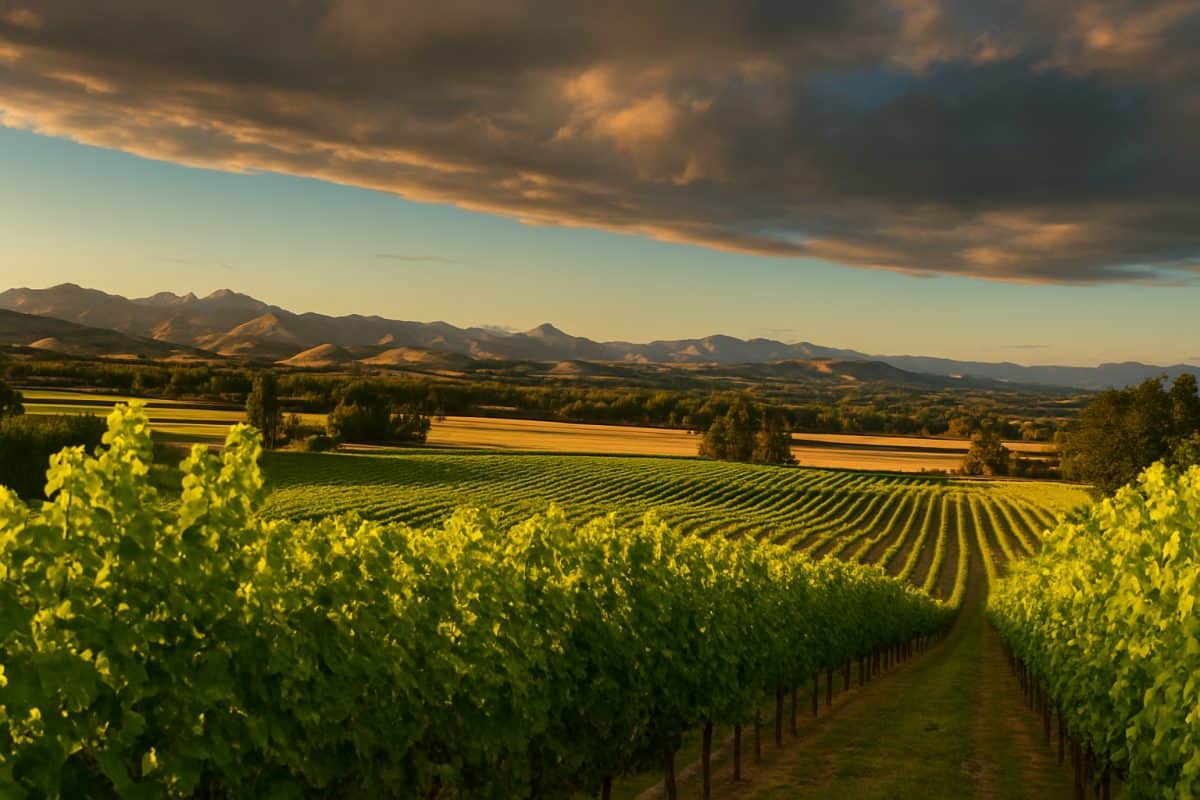
The light goes hard, the air turns bone dry, and the poplars start thrashing – the nor’wester has arrived. It is the wind every Cantabrian curses and every Waipara grower has a complicated relationship with. Understanding where it comes from, and what it does to a vine, changes how you taste everything the valley pours.

If you have spent a summer in Canterbury, you know the nor’wester before you can name the science behind it. The light goes hard and white, the air turns dry enough to crack your lips, and somewhere up the valley a stand of poplars starts thrashing about. What you are feeling is a foehn wind, and the mechanism is worth knowing because it explains so much of what ends up in a Waipara glass.
It starts on the wrong side of the country. Moist air rolls in off the Tasman, hits the Southern Alps, and is forced to climb. As it rises it cools and dumps its rain on the West Coast, which is why Hokitika is drowning while you are squinting in Amberley. By the time that same air spills down the eastern slopes it has lost its moisture, and the descent warms it further. It arrives over the plains warm, dry, and in a hurry.
A grower watching that wind tear up the valley is not necessarily unhappy about it. Grapes hate damp far more than they hate a blow. Fungal diseases such as botrytis and powdery mildew need still, humid air to take hold, and the nor’wester gives them neither. It strips the moisture off the leaves, opens up the canopy, and dries the bunches before rot can get a foothold.
This is the quiet upside that Waipara growers rarely advertise but happily admit to over a tasting. In a wetter region you spray more, you fret more in the lead-up to harvest, and a humid week before picking can cost you a vintage. A good dry wind buys insurance against all of that. It is one of the reasons North Canterbury can ripen thin-skinned varieties without the disease pressure that troubles regions with softer, stiller air.
None of which makes the nor’wester a friend, exactly. It is more like a useful colleague with a temper.
The temper shows up at the worst possible moment. When the vines flower in early summer, the whole season hangs on a few delicate weeks of fruit-set. A hot, dry nor’wester at flowering can disrupt that process, and a poor set means fewer berries and a lighter crop. The same wind that protects the fruit later can thin it out before it has properly formed.
Then there is the heat. A sustained blow pulls water out of the soil and the vine faster than the roots can replace it, and a stressed vine shuts down to protect itself. Growers answer with irrigation, which is not optional here so much as assumed, and even then a run of fierce nor’west days in February can leave a mark on the season.
So the honest accounting is a ledger, not a win. The wind that keeps the canopy clean can also rob you at flowering and bake you in midsummer. Anyone who tells you the nor’wester is simply good for Canterbury wine has only read half the page.
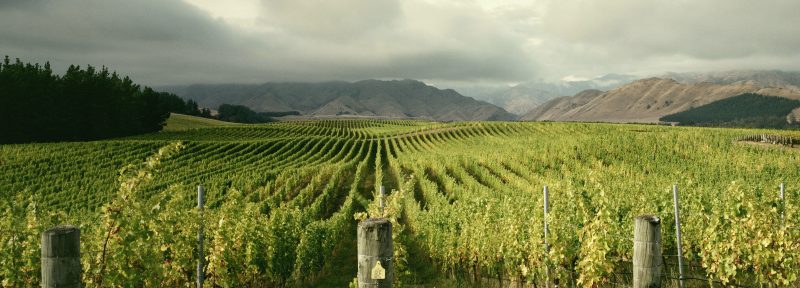
Step back from the individual gusts and the wind becomes a climate. The Alps do not just feed the occasional nor’wester; they sit permanently between Canterbury and the prevailing westerlies, wringing the rain out before it ever reaches the plains. The result is a rain shadow, and Canterbury lives inside it.
What that buys the region is sunshine and dryness. Among New Zealand’s wine regions, Canterbury sits at the warm, dry, bright end of the scale, with some of the highest summer temperatures and the lowest rainfall going. It is a real advantage and worth stating plainly, without dressing it up. Vines like sun and dislike sodden ground, and the rain shadow delivers a lot of the former and not much of the latter.
The same mountains that make Canterbury sunny also make it thirsty: water here is something you plan for, not something you rely on.
Geography does the rest of the work, and Waipara has a particular quirk of it. Most of coastal Canterbury gets a cooling sea breeze off the Pacific in the afternoon, which takes the edge off the heat. Waipara largely does not, because the low coastal ridges of the Cheviot Hills stand between the valley and the sea and block that breeze before it arrives.
The effect is small on a map and large in the glass. Sheltered from the maritime cooling, the Waipara valley floor runs warmer than the surrounding Canterbury plains, particularly through the afternoon and into the evening. Those extra degrees, accumulated across a season, are what let the valley push grapes to fuller ripeness than its latitude would suggest.
It is a reminder that wine regions are not painted with broad strokes. Two vineyards an hour apart can sit in genuinely different climates because of a ridge of hills nobody outside the district has heard of.
All of this geography has a flavour. A warmer, drier, sunnier site ripens fruit more fully and more reliably, and that shows up in the wines Waipara is known for. The valley’s Pinot Noir tends to carry riper, darker fruit than you might expect this far south, with the structure that a decent diurnal swing between hot days and cool nights helps preserve.
Riesling is the other story the climate tells well, and it is the variety that put North Canterbury on the national wine map. The long, dry autumns let growers hang fruit late and chase complexity, and the region turns out everything from taut and dry to lusciously sweet depending on how brave the grower feels. The dryness that frets the irrigation manager is the same dryness that keeps disease off late-hanging bunches.
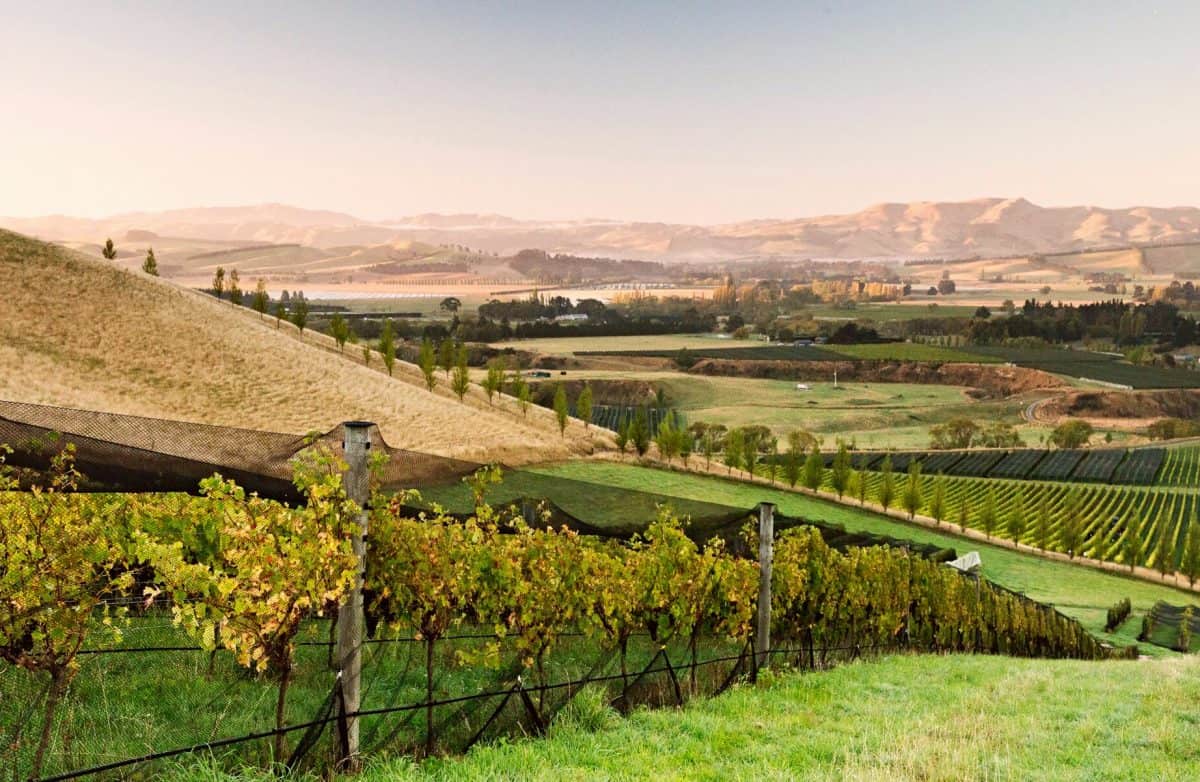
Climate sets the terms, but the wine grows in dirt, and the Waipara valley floor is built on greywacke gravels laid down by the river over a very long time. They drain fast, which in a wet region would be a problem and here is mostly a virtue. Water runs through them rather than sitting around the roots, and a vine that has to work a little for its water tends to make more interesting fruit.
The catch is that fast-draining gravels in a dry, windy climate hold very little in reserve. There is not much margin between a well-watered vine and a stressed one, which is why irrigation management on the gravels is less a convenience and more a constant act of judgement. The grower is effectively topping up a tank that empties quickly.
Dig deeper, or move onto the terraces above the valley floor, and the story changes. Beneath and around the gravels sit limestone-derived clays, and these behave almost the opposite way. Clay holds water, so a vine rooted into it has a reserve to draw on when the nor’wester is doing its worst. In the driest stretches of summer that buffer matters enormously.
This is the part North Canterbury growers get quietly excited about. Limestone is the soil that Burgundy built its reputation on, and the comparison comes up often around Waipara cellar doors, usually with the right amount of caution. Nobody serious is claiming the valley is Burgundy. They are pointing out that the region happens to have the kind of limestone-influenced ground that suits Pinot Noir and Chardonnay, and that this is not an accident growers ignore.
Knowing all this, the grower’s job becomes a series of considered bets against the wind. Site selection is the first and biggest one. Plant on the warm valley floor and you chase ripeness but expose yourself to the heat and the dryness; sit higher on the clay terraces and you trade some warmth for a water reserve and a little protection.
After that it is the daily work. Canopy management decides how much leaf to leave shading the fruit against a scorching nor’west afternoon versus how much to strip for airflow and disease control. Irrigation gets metered carefully, because too little bakes the vine and too much undoes the very dryness that keeps the fruit clean. Every one of these calls is a trade-off, and a grower who optimises hard for one risk usually pays for it somewhere else. There is no setting the controls and walking away here.
You can taste a lot of this without leaving the tasting bench, if you know what to ask. Next time you are at a Waipara cellar door, ask the person pouring how the spring went. A windy, blowy flowering will often mean a smaller crop, and a smaller crop frequently means more concentrated fruit, which the winemaker will usually be pleased about even as they grumble about the yield.
Ask about the summer too. A grower will happily tell you whether they spent February nursing stressed vines through a run of nor’west days, and you will start to hear the season in the wine in front of you. The vintage in your glass is partly a weather report, and the people who made it are generally glad to translate it.
It turns a tasting from a row of nice drinks into something closer to a conversation with the place itself. That is the whole reason to come up the valley rather than order a bottle online.
The nor’wester is easy to file under nuisance. It dries the washing out, frays the temper, and rattles the windows for days at a stretch. But it is also one of the hands that shapes every Canterbury wine, for better and for worse, and ignoring it means missing half of what is in the glass.
There is something fitting about a region defined by a wind that gives and takes in the same breath. The blow that protects the fruit can also thin it; the mountains that bring the sun also bring the thirst. Canterbury wine is the sum of those tensions, sorted out season by season by people paying close attention. Once you have felt the nor’wester for yourself, a Waipara Riesling stops being just a pleasant drink and starts being a record of a place that has to earn its sunshine.
Canterbury wine is the sum of its tensions, sorted out season by season by people paying close attention to a wind that gives and takes in the same breath. Once you have felt the nor’wester yourself, a Waipara Riesling stops being just a pleasant drink and starts being a record of a place that has to earn its sunshine.
Sophie Renwick
Wine Adventure
4 Comments
Reckon you’ve undersold the limestone a bit. The terraces and the valley floor are basically two different farms, the clay blocks behave nothing like the gravels in a dry summer.
That’s a fair point Ken, though I read it as them saving the soil detail for its own section rather than skipping it. Either way, asking how the spring went at the cellar door is great advice – tried it at a tasting last weekend and ended up chatting to the winemaker for half an hour.
Good honest write-up. The flowering point is the one people forget – a nasty nor’west week in November can quietly cost a grower half their crop and nobody outside the gate ever hears about it. Nice to see it called double-edged instead of just sold as free disease control.
Grew up in Amberley and the bit about Hokitika drowning while you’re squinting on the plains is exactly it. Never once connected the washing-line wind to what’s in my Riesling though. Lovely piece.