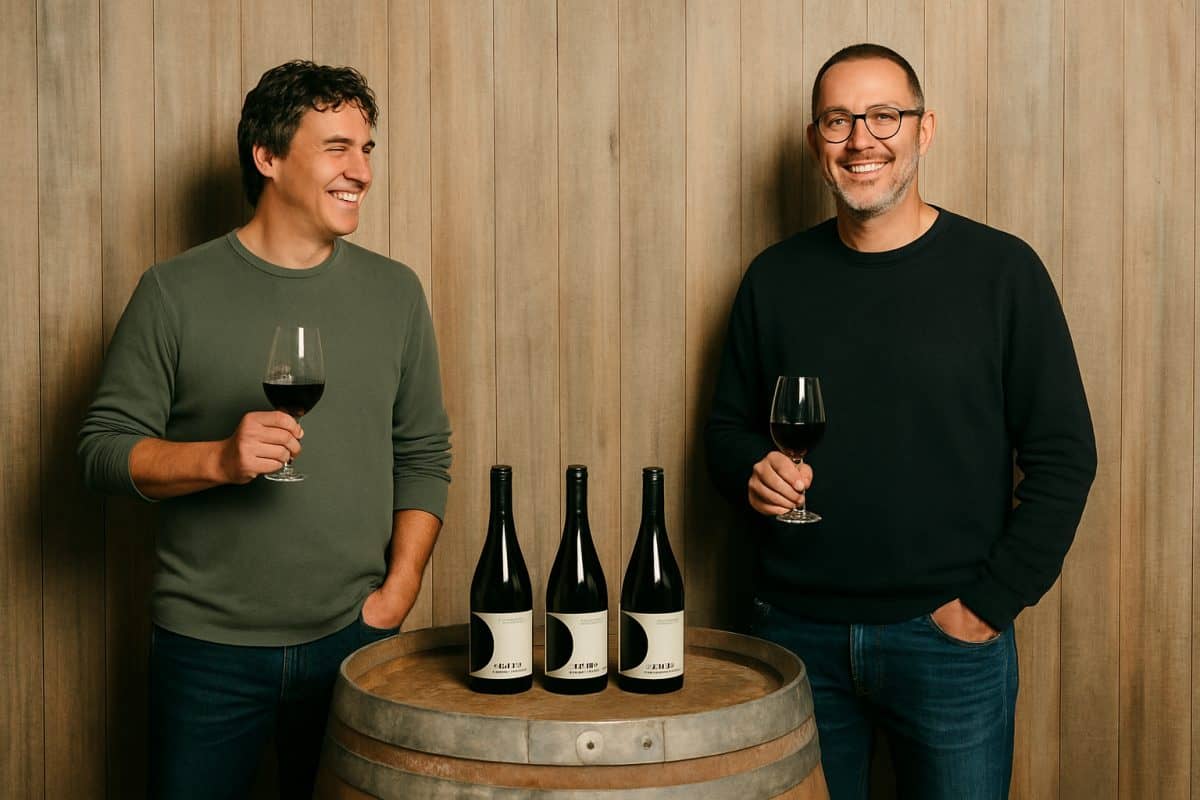
Canterbury’s wine region has always been shaped by people willing to take a chance on a place that has not finished becoming itself. The original pioneers — the families who planted Pinot Noir and Riesling in the Waipara Valley when the conventional wisdom said the South Island’s wine future was all Marlborough — proved that cool-climate winemaking could work here, and work brilliantly. Now a newer generation is arriving, bringing different training, different varieties, and different ideas about what Canterbury wine can be.
These are not corporate operators chasing the next hot region. They are winemakers who looked at Canterbury’s limestone soils and reliable sunshine and saw something worth building a life around — even if that life currently involves leased vineyard blocks, borrowed fermentation tanks, and Saturday mornings behind a market stall. What they share is a conviction that Canterbury’s best wines have not been made yet, and a willingness to bet their careers on being the ones to make them.
Canterbury’s appeal to a young winemaker is geological before it is anything else. The limestone bands running through the Waipara Valley and North Canterbury foothills are old — Tertiary-era marine sediment, the kind of thing that takes millions of years to become interesting. Pinot Noir grown on limestone behaves differently here than it does on the greywacke gravel of Central Otago. The wines carry a chalky, mineral thread that gives them structure without heaviness, and it is this textural quality that keeps drawing people south.
Then there is the climate. Canterbury sits in a sweet spot of continental influence — warm, dry summers with a reliable diurnal temperature range that lets grapes ripen slowly while holding onto the acidity that makes cool-climate wine worth drinking. The nor’wester can be brutal, but it also dries fruit quickly after rain, which means less disease pressure and fewer compromises at harvest. For winemakers coming from regions where vintage variation feels like a coin flip, Canterbury’s relative predictability is quietly attractive.
What you hear from the newer arrivals is not that Canterbury is easy — it is not — but that the terroir is legible. Plant the right variety in the right spot and the land tells you something specific. That legibility matters when you are trying to make wines that taste like a place rather than a recipe.
Marlborough has Sauvignon Blanc. Central Otago has Pinot Noir. Canterbury, by comparison, has an open conversation. The region’s identity is still being assembled, and for a certain kind of winemaker that is not a weakness but an invitation. You can plant Gruner Veltliner here without someone telling you that is not what Canterbury does, because Canterbury has not entirely decided what it does yet.
This matters more than it might sound. Established wine regions develop orthodoxies — not formal rules, but strong expectations about which varieties belong, which winemaking techniques are appropriate, which price points the market will accept. Young winemakers arriving in Marlborough or Hawke’s Bay inherit those expectations. In Canterbury, the template is thinner. The pioneering estates — Pegasus Bay, Mountford, Black Estate — set a standard of quality but did not prescribe a narrow path. There is room to push sideways.
Several of the newer producers mention this explicitly when you ask why Canterbury. They did not come here despite the lack of a defined regional style. They came because of it. The region is small enough that a single determined winemaker can actually shift the conversation about what belongs here, and that kind of agency is hard to find in more established places.
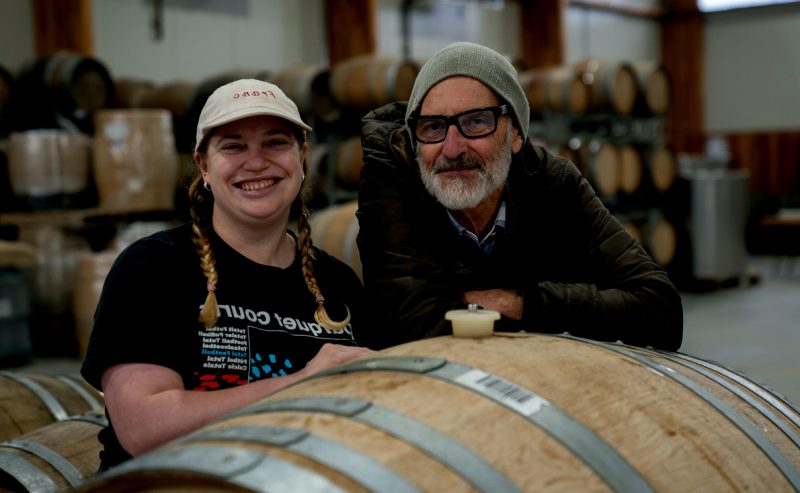
Jess Willems spent four years as assistant winemaker at a well-regarded Marlborough operation — the kind of job that comes with a salary, a harvest crew, and someone else’s name on the label. She left in 2023 to lease a small block of Pinot Noir and Chardonnay on the Omihi terraces, north of Waipara. The first vintage was 2024, made in a shared facility with borrowed equipment and the particular optimism of someone who has not yet experienced a Canterbury frost event on their own dime.
What drew her was specificity. In Marlborough she was making good wine from reliable fruit, but the house style was the house style. In Canterbury, she wanted to make wine that responded to a single site — one slope, one soil type, one set of conditions. The Omihi block is elevated, north-facing, with clay over limestone. The Pinot Noir from the first vintage was lighter than what she had been making in Marlborough. More floral, more transparent. She describes it as the soil talking louder than the winemaker, which is exactly what she was after.
Willems is still working contract harvest jobs to fund the operation. The wines are sold through a mailing list and two Christchurch restaurants. The scale is tiny, but the intent is serious, and the early bottles suggest the site has something to say.
Tomasz Krol arrived in Canterbury via Burgundy, Oregon, and a brief detour through the Yarra Valley. Polish-born, French-trained, and cheerfully unburdened by any prior relationship with New Zealand wine orthodoxy. He and his partner bought a neglected vineyard block near Amberley in 2022, spent the first year pulling out tired Muller-Thurgau and replanting with Pinot Noir, Gamay, and Albarino — a combination that raised eyebrows among the established growers but made perfect sense if you had spent time in cooler corners of the wine world.
Krol’s advantage is that he has no nostalgia for how Canterbury wine used to be made. He sees limestone and cool nights and immediately thinks of Burgundy’s leaner vintages, of Oregon’s Willamette Valley before it became expensive. His winemaking reflects this — whole-bunch fermentation, extended skin contact, long ageing in older oak. The resulting wines are more savoury and textural than what most Canterbury producers release. They are also, frankly, a bit challenging on first taste, which Krol considers a feature rather than a problem.
The Amberley locals have warmed to him, partly because he throws good harvest dinners and partly because the wines are undeniably interesting. His 2024 Gamay — one of the only examples in Canterbury — is a pale, crunchy, slightly funky thing that tastes like no other wine in the region. That is precisely the point.
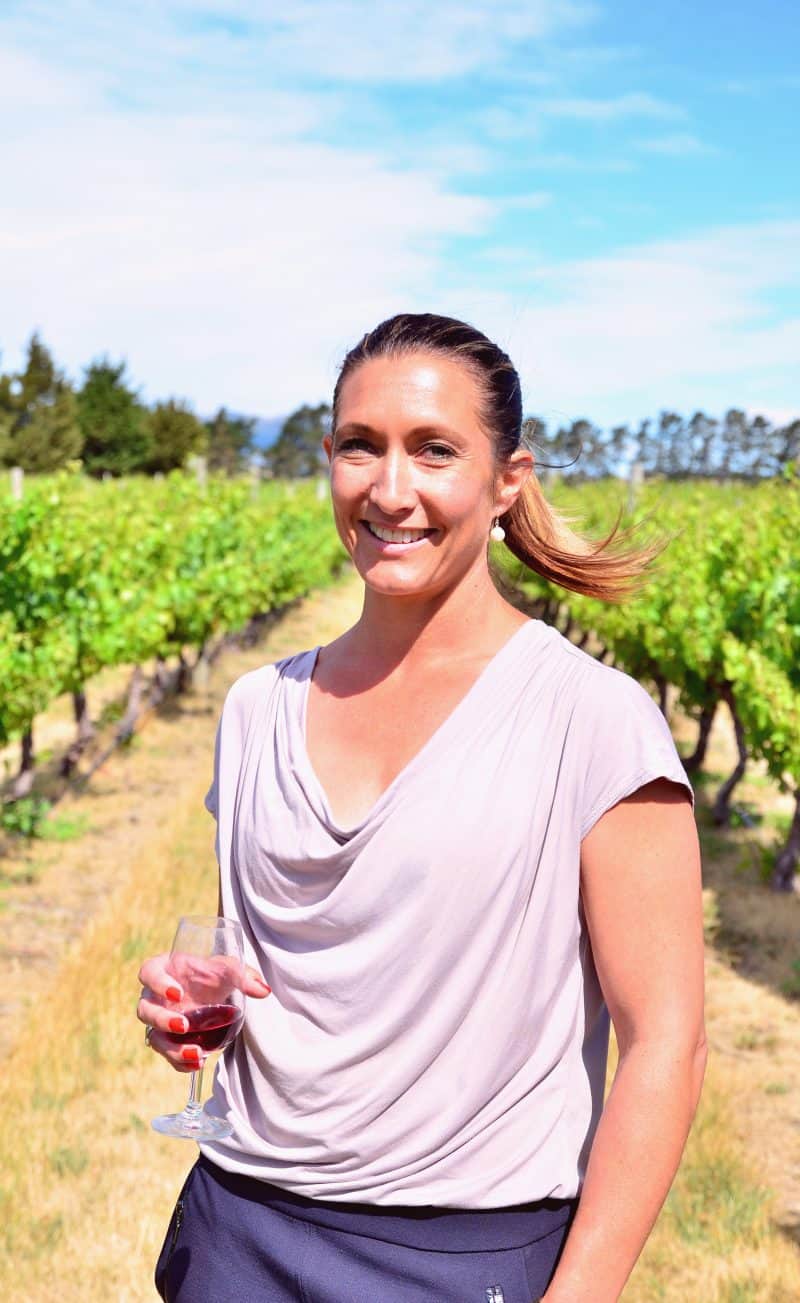
Canterbury’s established calling cards are Pinot Noir and Riesling, and the new guard is not abandoning those varieties — several are making excellent examples of both. But they are also broadening the palette. Gruner Veltliner is appearing on more new plantings, its Austrian cool-climate credentials translating surprisingly well to Canterbury’s limestone soils. A couple of producers are trialling Albarino, betting that the variety’s natural acidity and salinity will find a home in the dry Canterbury air.
Then there is Gamay, which reads as a provocation in a Pinot Noir region but actually makes sound viticultural sense. Gamay ripens earlier, handles cool temperatures gracefully, and produces a style of red wine — light, aromatic, meant to be drunk with pleasure rather than reverence — that fills a gap in Canterbury’s offering. The early examples from the region are promising: bright, slightly tart, with a crunchy fruit quality that works beautifully at cellar door temperature on a warm afternoon.
This variety expansion is not random experimentation. The new winemakers are reading Canterbury’s terroir carefully and asking what else it might support. The answers are still provisional — some of these plantings are only two or three years old — but the direction is clear. Canterbury’s wine story is about to get more interesting.
The generational shift in Canterbury is as much about how wines are made as what grapes go into them. The newer winemakers tend toward minimal intervention — wild yeast fermentation, less new oak, less fining and filtering, more willingness to let a wine be slightly imperfect if that imperfection carries flavour. This is not unique to Canterbury, of course. The natural wine conversation has been running globally for twenty years. But it lands differently in a region where the terroir signal is this clear.
Whole-bunch fermentation is common among the new arrivals. The technique — fermenting with grape stems intact rather than destemming first — adds a savoury, almost herbal quality to red wines and contributes tannin structure without the weight of heavy oak. Done well, it makes wines that are simultaneously lighter and more complex. Done badly, it makes wines that taste like garden mulch. The Canterbury newcomers are mostly doing it well, though the occasional bottle wanders into challenging territory.
What connects these cellar choices is a shared philosophy: the winemaker’s job is to transmit the vineyard, not to transform it. When you taste a whole-bunch Canterbury Pinot Noir fermented with wild yeast and aged in neutral oak, you are tasting the limestone and the nor’wester and the particular heat of the 2024 summer more than you are tasting a winemaker’s decisions. That transparency is what the new guard is after, and when it works, the wines are genuinely compelling.
Here is the quiet truth about Canterbury’s new wave: most of these winemakers are still working with young vines, leased blocks, or purchased fruit. It takes a minimum of three years for a newly planted vine to produce a usable crop, and five to seven years before the root system is deep enough to deliver the kind of site-specific character that these winemakers came to Canterbury to find. The wines being released now are promising sketches, not finished paintings.
This is not a criticism — it is context. When Jess Willems talks about her Omihi Pinot Noir expressing the limestone terraces, she is talking about what she tasted in a single vintage from vines she did not plant. The real test comes when her own blocks mature, when the roots have pushed through clay into limestone, when the vine has weathered enough Canterbury seasons to find its own balance. The most interesting Canterbury wines of this generation have not been made yet.
For visitors and drinkers, this means paying attention now. The early vintages from new producers are worth seeking out not because they are perfect but because they establish a baseline. When the same winemaker releases a wine from the same site five years from now, you will want to have tasted the beginning of the story. That is how a wine region reveals itself — not in a single great bottle but in the accumulation of vintages.
Finding the new generation’s wines requires a bit more effort than pulling into a signposted cellar door, but not much more. Several of the newer producers pour at the Christchurch Farmers’ Market on Saturday mornings — a good place to taste three or four things without committing to a full winery visit. The market is also where you will actually meet the winemakers, because at this scale they are usually the ones behind the table.
For cellar door visits, the Omihi and Amberley areas north of Waipara are where most of the new activity is concentrated. Not all of the newer producers have tasting rooms — some operate by appointment only, some sell exclusively through mailing lists and a handful of Christchurch wine bars. Check before you drive. Supreme Supreme on Victoria Street and Cellar Door on New Regent Street are both reliable places to find new Canterbury releases by the glass.
The best approach is to visit one or two established Canterbury producers — the ones whose names you already know — and then ask them who else you should be tasting. The wine community here is small enough that everyone knows what everyone else is doing, and the established names are generally generous about pointing visitors toward the newer arrivals. Canterbury winemakers compete on quality, not on secrecy, and the rising tide of regional reputation benefits everyone with a vine in the ground.
Canterbury’s wine story has always been written by arrivals — people who came from somewhere else and saw potential that the locals had overlooked. The new guard is continuing that tradition, but with different tools and different ambitions. They are planting varieties that nobody expected to see here, making wines with less intervention and more transparency, and building businesses at a scale that prioritises quality over volume. Whether Canterbury becomes the next great New Zealand wine region or remains a beautiful, underrated corner of the industry, these winemakers will have shaped the answer. The most useful thing a wine drinker can do right now is pay attention.
Sophie Renwick
Wine Adventure
Leave a comment