
Somewhere beneath the most celebrated Pinot Noir hills in North Canterbury runs a band of pale limestone — the compressed floor of an ancient sea. It is the reason Bell Hill, Pyramid Valley, Black Estate and Greystone make the wines they do, and once you know the seam is there, you cannot un-taste it.

Drive north past Amberley and the land starts to crumple. The flat river gravels of the Waipara basin give way to low hills, and somewhere under the tussock and the vine rows runs a seam of pale rock that explains more about the wine in your glass than any tasting note ever will. It is limestone — the compressed remains of a shallow sea that covered this part of North Canterbury millions of years ago, lifted and tilted by the same forces that built the Southern Alps.
Where that limestone sits close to the surface, the soil that forms over it is a rendzina: thin, dark, full of calcium, and stubbornly shallow. Roots do not have an easy time of it. They hit rock early and have to work, which is exactly the point. A vine that struggles puts its energy into fruit rather than foliage, and the calcium-rich ground lends the eventual wine a particular kind of tautness — the sort of structure you notice as a faint grip on the back of the palate rather than anything you could put a number on.
There is a temptation, when people talk about terroir, to make it sound mystical. It is not. The reason Pinot Noir behaves the way it does on these hills comes down to fairly unromantic facts: how fast water drains, how warm the soil stays, how readily the roots can reach the minerals they need. Limestone happens to be good at most of these things. It drains well, it warms quickly in spring, and the calcium changes how the vine takes up other nutrients.
What you taste, then, is partly a record of the rock. The salinity and the minerality that North Canterbury growers keep coming back to when they describe their Pinot are not marketing inventions — they are the flavour of a vine that grew in old sea floor. Once you know the seam is there, you start to read the region differently, hill by hill.
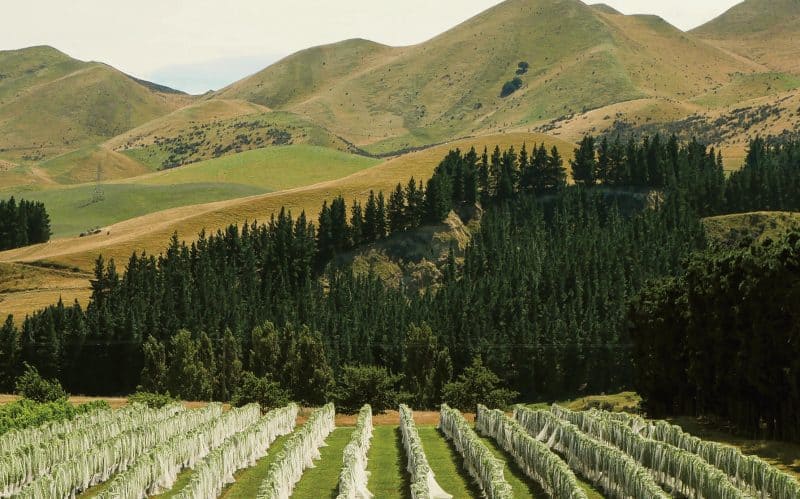
Down on the Waipara basin floor, the dominant soil is Glasnevin gravel — the legacy of the river that has spent a very long time spreading stones across the valley. These are free-draining, stony, alluvial soils, the kind that warm fast and hold little water. They suit Riesling and the earlier-ripening varieties, and they give wines with brightness and a certain directness.
This is the part of the region most visitors actually see, because the basin is where the cellar doors cluster and where the cycle trail threads between vineyards. It is easy to assume the whole region is built on these gravels. It is not. The basin is just the floor of the room; the interesting walls are up in the hills, and they are made of something else entirely.
Climb out of the basin toward Omihi and the soil changes underfoot. Here the limestone weathers into a clay loam — heavier, slower-draining, with more water-holding capacity than the gravels below. This is where you find Black Estate and Greystone, both working slopes where the calcium-rich clay sits over the underlying rock.
The clay loam does something the gravels cannot. It holds enough moisture to carry a vine through a dry Canterbury summer, but the limestone beneath keeps the structure honest, so the wines do not turn flabby. The result is Pinot with both flesh and frame — generous enough to drink young, structured enough to reward patience. It is a soil that asks for a slightly later-ripening style, and the Omihi producers have spent years learning to read it.
Further inland again, around Waikari, the seam comes nearest the surface and the vineyards climb to between roughly 250 and 300 metres. This is the purest expression of the limestone story: thin rendzina soils sitting almost directly on the rock, at an elevation that keeps the nights cool and stretches out the growing season.
This is the ground beneath Bell Hill and Pyramid Valley, two of the most quietly revered Pinot sites in the country. Bell Hill is planted on an old lime quarry, which is about as literal as terroir gets — the vines are growing in ground that was once dug for its limestone. The combination of altitude, exposure and that shallow calcareous soil produces wines of real tension and length. These are not big, obvious Pinots. They are wines that hold something back, and the holding-back is the appeal.
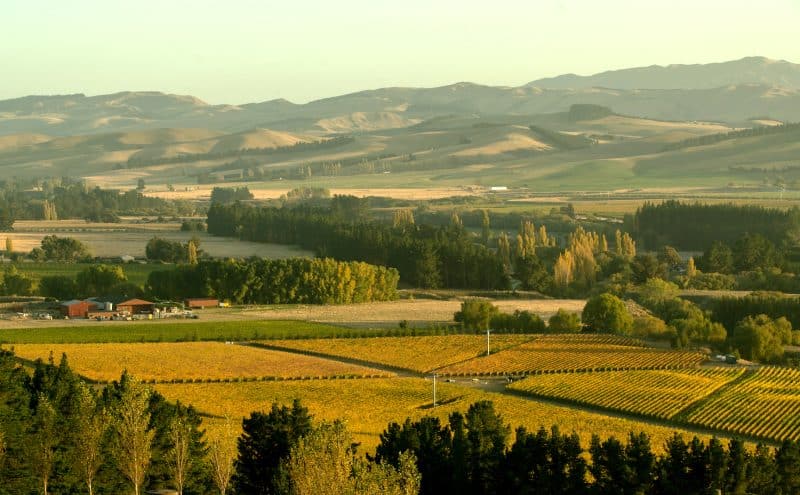
Long before anyone planted a vine on these hills, the limestone here had a different value. The old Omihi Limeworks quarried some of the purest agricultural lime in the South Island, the sort farmers spread on sour paddocks to sweeten the soil. For decades the seam was prized for what it could do to a pasture, not a Pinot.
There is a neat symmetry to it. The same calcium that once corrected the acidity of Canterbury farmland is now doing something similar, in its undisturbed state, beneath the vine rows. The chemistry that made this rock worth digging up is the chemistry that makes the wine taste the way it does. The farmers were reading the ground correctly; they were just after a different harvest.
Bell Hill is the clearest example of what happens when growers take the geology seriously. The vineyard sits on a former lime quarry near Waikari, planted at high density on ground so shallow and stony that the early work of establishing vines was, by all accounts, brutal. The decision to plant there was not a commercial no-brainer — it was a bet on the rock.
That bet rests on an idea you hear all over this region: that the best sites are often the hardest ones. Poor, thin, calcareous soil does not grow much, but what it does grow, it grows with intensity. The vines are forced into the limestone, the yields stay low, and the fruit concentrates. It is a long way from the easy abundance of the basin floor, and that difficulty is exactly what is in the bottle.
If you only ever taste North Canterbury Pinot from the basin, you get a perfectly good but incomplete picture. The wines that have built the region’s reputation come from the slopes and the high ground — from Omihi clay and Waikari limestone — where the seam does its work. The flats give you fruit; the hills give you structure, and structure is what ages.
It is worth saying plainly: this is not snobbery about altitude. It is a matter of what the rock allows. A vine on free-draining gravel and a vine on shallow rendzina are having two completely different conversations with the ground beneath them, and the wines are honest about which one they had. The national wine bodies have started to map these distinctions properly, and you can trace the broad outlines in the way the North Canterbury region is now described — gravels on the valley floor, limestone-derived clays on the hills.
You do not need a geology degree to notice the seam in a glass. The next time you open a Pinot from Omihi or Waikari, look past the fruit for a moment and pay attention to the finish — that faint saline grip, the sense that the wine has a spine running through it. That is the limestone talking. It is subtle, and it is easy to miss if nobody tells you it is there.
A couple of important caveats. Bell Hill and Pyramid Valley are appointment and allocation only — these are not cellar doors you can rock up to on a Sunday drive, and this is a story about place, not a tasting itinerary. But the seam runs under producers you can visit too, and Black Estate and Greystone at Omihi both pour wines grown on the same calcareous slopes. If you want to understand what the Waipara subregion is really built on, the Waipara wine district is a reasonable place to start before you go. The ground does the rest of the explaining.
Terroir is an easy word to wave around and a hard one to mean. In North Canterbury it has a clear, physical answer: a seam of old sea floor that decides which hills grow wines with a spine and which grow wines that are merely pleasant. The rock was here long before the vines, and it will outlast them. The growers are just the latest people to work out what it is worth.
Sophie Renwick
Wine Adventure
4 Comments
That line about Bell Hill being planted on an old lime quarry is wild. Terroir as literal as it gets, like you say. Always wondered why those wines have that grippy finish and now I have something to blame it on.
Spot on about the basin giving you fruit and the hills giving you structure. I’d driven the cycle trail twice and assumed the whole valley was on those gravels. The Omihi clay loam stuff was news to me.
Good of you to be straight up that Bell Hill and Pyramid Valley are allocation only. Saves people the disappointment of turning up expecting a cellar door. Black Estate at Omihi is well worth the drive though if anyone’s reading this and wanting somewhere actually open.
Reckon the bit about the old Omihi Limeworks is the part that stuck with me. Same calcium that fixed sour paddocks now sitting under the vines. Lovely symmetry.