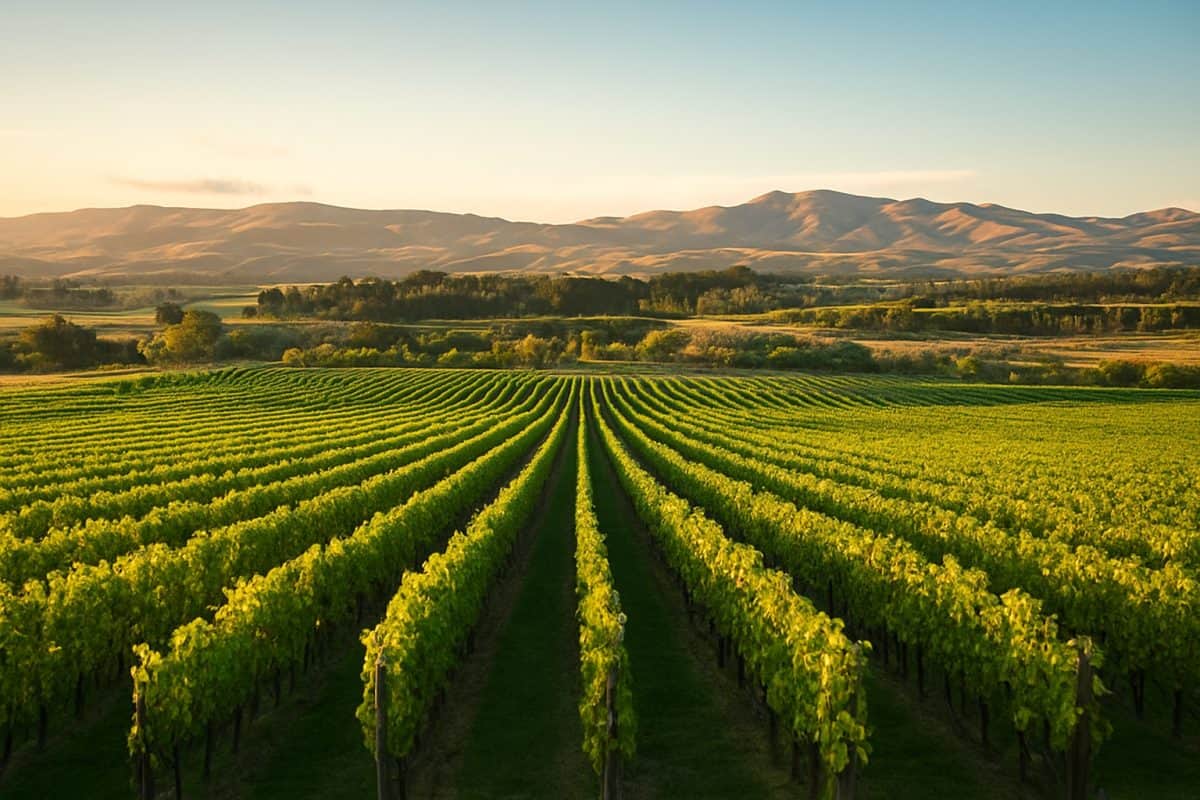
Waipara Valley is not hard to get to. It is 45 minutes north of Christchurch on a straight highway, and the turnoff is well signposted. But there is a gap between knowing where something is and knowing how to actually do it — where to park, whether you can get there without a car, where to sleep if you want to stay the night, and what to do about the fact that wine tasting and driving are fundamentally incompatible activities. This is the practical stuff. Not glamorous, but the kind of information that makes the difference between a smooth visit and one where you are googling accommodation from a cellar door car park at 4pm.

Waipara Valley sits about 65 kilometres north of Christchurch, straight up State Highway 1. In theory, the drive takes 45 minutes. In practice, it takes closer to an hour once you account for the Christchurch motorway, the odd speed camera near Woodend, and the fact that you will probably slow down through Amberley without meaning to.
The route is dead simple. Head north on SH1 past the airport, through Woodend and Waikuku, and keep going until you see the Waipara Valley turnoff on your left. Most cellar doors sit along Omihi Road or the roads branching off it. If you hit Cheviot, you have driven too far.
There is an inland route via Oxford and the Lees Valley Road, but unless you have a specific reason — and a tolerance for gravel — stick to the highway. SH1 is flat, sealed, and well signposted. The only thing that genuinely slows you down is the Waimakariri Bridge at peak times, and even that adds ten minutes at worst. Leave Christchurch by 10am on a Saturday and you will be tasting wine before 11.
The honest answer is that public transport to Waipara barely exists. There is no direct bus service from Christchurch to the valley that drops you at a cellar door. InterCity coaches pass through on the Christchurch to Kaikoura run, but they stop at the Waipara township — not the wineries — and the return schedule does not exactly lend itself to a leisurely tasting afternoon.
Some people have floated the idea of catching the coach up and arranging a pickup from there, which is technically possible but logistically awkward. The township is a small settlement with a pub and a petrol station, not a transport hub. You would still need a ride to the actual vineyards, which are spread across several kilometres of valley roads.
The reality is that Waipara is a driving destination. This does not mean you need to own a car — rental vehicles work fine, and the drive is easy enough that even visitors unfamiliar with New Zealand roads manage it without drama. But if you are hoping to arrive by bus and walk between cellar doors, you will have a frustrating afternoon.
If you leave Christchurch without coffee, Amberley is your best bet. It sits right on SH1 about fifteen minutes before the Waipara turn, and has a handful of decent cafes along the main street. The Hurunui Hotel does a solid flat white if you want something quick.
Fuel up in Christchurch or Amberley. There is a petrol station in Waipara township, but it is small and not always the cheapest. Amberley has a proper Z station on the highway.
What you can skip: the various fruit stalls and roadside shops between Woodend and Amberley. They are fine, but you are 45 minutes from home, not three hours into a road trip. Save your stopping energy for the valley itself. The one exception is the Amberley farmers market on Saturday mornings, which runs seasonally and is worth ten minutes if you catch it. Otherwise, drive straight through. The cellar doors are the destination, and most of them serve food or have platters — you will not go hungry once you arrive.
Waipara is not overflowing with cheap beds, but there are options if you plan ahead. The Waipara Sleepers railway carriages offer a quirky budget stay right in the township — basic, clean, and close enough to the valley that you could walk to the pub afterwards. Book early in summer because they fill up.
For something more conventional, the Amberley motels along SH1 are functional and affordable. They are not glamorous, but you get a warm room, a decent shower, and a ten-minute drive to the first cellar door in the morning. The Dorans Motor Inn and Dorans Garden Motel are both reliable.
Camping is possible at the Waipara River Reserve or the Hurunui District campgrounds, though facilities are basic — think long-drop toilets and cold water. Fine in January, less appealing in June. If you are set on camping with comforts, the North Canterbury holiday parks near Hanmer Springs are about 40 minutes further north, which rather defeats the purpose of staying close to the wineries.
This is where the overnight stay becomes part of the experience rather than just a practical necessity. Claremont Estate offers vineyard accommodation with the vines literally outside your window — you wake up in the landscape you came to visit. It books out well ahead in peak season, so plan accordingly.
Pegasus Bay has a small cottage on the property that sits in the kind of garden you stop and photograph. Staying there puts you within walking distance of one of Canterbury’s most established cellar doors, which solves the designated driver problem neatly for at least one visit.
Black Estate has accommodation too, a modernist house looking out over the valley. It is minimal in the deliberate sense — clean lines, good materials, the kind of place where the view does the decorating. Further afield, Dorenell Country House near Waikari offers a more traditional lodge experience, about twenty minutes from the main cluster of wineries. These places run anywhere from $200 to $450 a night, depending on the season and how far ahead you book.
Amberley is the nearest proper town to Waipara Valley, and for some visitors it makes more sense as a base than staying in the valley itself. The town has a supermarket, pharmacy, and several restaurants — things you will not find among the vineyards.
The drive from central Amberley to the first Waipara cellar doors is about ten minutes, which is short enough to feel convenient but long enough that you are still driving. The advantage is practical: you can stock up on supplies, eat somewhere that is not a cellar door kitchen, and still be among vines before the morning light gets harsh.
The trade-off is atmosphere. Staying in the valley, you are waking up surrounded by the thing you came for. Staying in Amberley, you are in a small Canterbury town that happens to be near some vineyards. Both are fine. If you are travelling with someone who is less committed to the wine mission and would appreciate access to a proper cafe and a decent bakery, Amberley is the diplomatic choice.

Here is the uncomfortable truth about wine touring: someone has to not drink, or everyone has to spit. The cellar doors all provide spit buckets, and nobody will judge you for using them. Most of the serious wine people spit. But if you are visiting three or four places in an afternoon and tasting five wines at each, even restrained sipping adds up.
The simplest solution is a designated driver, which means one person in the car has a less fun afternoon. Some couples rotate — you drive this trip, I drive next time. It works, but it requires a level of relationship maturity that not everyone has reached.
Hassle Free Tours and Canterbury Wine Tours both run small-group excursions from Christchurch that include transport, tastings, and usually lunch. Prices sit around $150 to $250 per person depending on the itinerary. The upside is that nobody drives and someone else does the planning. The downside is that you move on someone else’s schedule. For a first visit, a tour is genuinely worth considering. Once you know the valley, you will probably want to drive yourself and choose your own stops.
Waipara Valley is more spread out than it looks on a map. The main cluster of cellar doors runs along Omihi Road and its side roads, covering roughly a fifteen-kilometre stretch. You cannot realistically walk between them unless you are visiting immediate neighbours like Pegasus Bay and Lime Rock.
Parking is never a problem. Every cellar door has its own car park, usually gravel, and even on the busiest summer weekends there is space. This is not Queenstown. You will not circle the block looking for a spot.
The distances between wineries mean you are doing short drives of two to five minutes between stops, which is both convenient and slightly annoying if you are trying to minimise driving. A rough circuit might run: Black Estate on the terrace, down to Pegasus Bay, across to Greystone, then over to Waipara Hills. That loop covers the main cluster without much backtracking. Having a rough plan saves time, but there is no need to be rigid about it.
Summer — December through February — is peak visiting season. The vines are green, the weather is usually warm and dry, and every cellar door is open. The catch is that everyone else has the same idea, so weekends get busy. If you can visit on a weekday in January, you will often have tasting rooms nearly to yourself.
Autumn is arguably the best time. March and April bring harvest activity, golden light, and warm-enough days without the crowds. Some wineries offer harvest experiences or behind-the-scenes visits during this period. The landscape shifts colour in a way that makes the valley feel like a different place.
Winter is quieter and some smaller producers close their doors or operate by appointment only. Check ahead between June and August. The larger operations — Pegasus Bay, Waipara Hills, Greystone — stay open year-round, but hours may be shorter.
One thing that catches first-timers: not every cellar door charges for tastings, but some do, typically $5 to $15, often refundable against a purchase. Carry cash as a backup. And book lunch if you want to eat at Pegasus Bay or Black Estate — their restaurants fill up on weekends, especially in summer.
None of this is complicated, which is sort of the point. Waipara is close to Christchurch, easy to drive, and straightforward to navigate once you arrive. The main thing worth planning ahead is how you handle the drinking-and-driving equation — whether that means booking a tour, nominating a driver, or staying overnight. Everything else falls into place. Fill the tank in Amberley, point the car up Omihi Road, and let the valley do the rest.
Sophie Renwick
Wine Adventure
Leave a comment