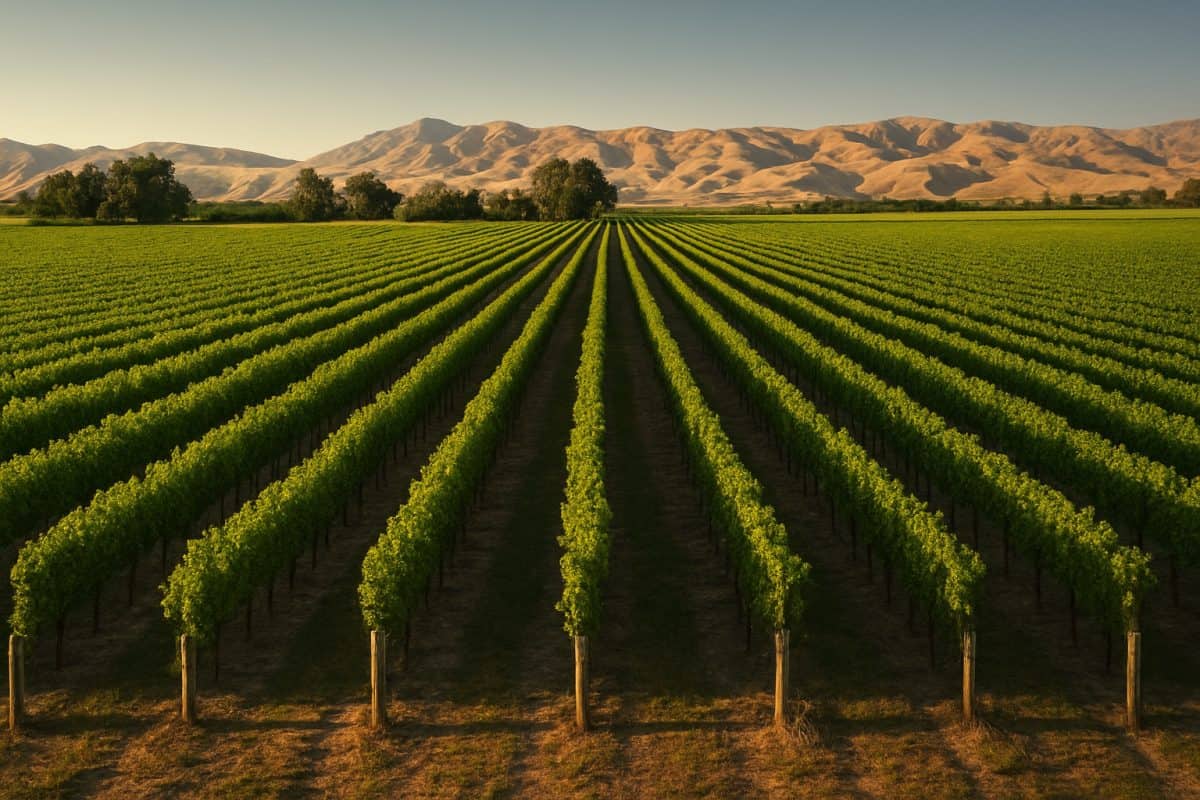
Canterbury wine did not begin with a grand vision. It began with a five-hundred-dollar research grant in 1973, a scientist at Lincoln College who wanted to know whether grapes could ripen this far south, and a Czech winemaker who arrived in the same year. Within a decade that modest experiment had produced Canterbury’s first gold medal and quietly settled an argument the rest of the country was still having.
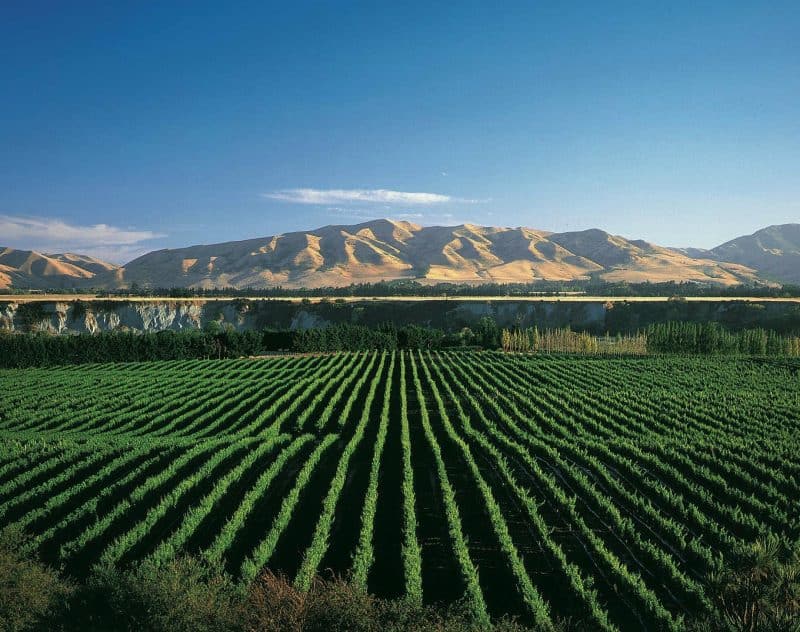
For most of the twentieth century the assumption about Canterbury was simple: too cold, too windy, too far south for serious grapes. Nobody had really tested it. That changed in 1973, when Dr David Jackson, a horticultural scientist at Lincoln College south of Christchurch, secured a research grant of five hundred dollars to find out whether the assumption was true.
It is a small sum to anchor an industry to, and that is rather the point. This was not a confident bet on Canterbury wine. It was a modest, careful experiment by a researcher who wanted data rather than a result. Could vines ripen here at all, and if they could, which ones?
Jackson is now widely regarded as the research father of the Canterbury wine industry, though at the time he was simply a scientist with a question and just enough funding to chase it down a row of young vines.
The grant paid for trial plantings at Lincoln, and Jackson did not narrow the field early. Roughly forty different grape varieties went into the ground so that the experiment could sort the plausible from the hopeless rather than assume the answer in advance.
This is the unglamorous heart of the story. Before there were cellar doors or gold medals, there were rows of experimental vines being measured for when they flowered, how they set fruit, and whether they ripened before the autumn cold shut the season down. Most varieties were never going to suit Canterbury. The work was in finding the handful that might.
What the trials began to suggest was that the cool climate was not simply a handicap to be overcome. For certain varieties, particularly those that prefer a long, slow ripening season, it might even be an advantage. That idea would take years to prove, but it started here, on a college research block, with a researcher counting days to harvest.

The same year Jackson won his grant, a Czech-born winemaker named Danny Schuster arrived in New Zealand. Schuster brought something the Lincoln trials could not generate on their own: hands-on European winemaking experience, and an instinct for what cool-climate fruit could become in the cellar rather than just on the vine.
He joined the Lincoln project, and the partnership mattered. Jackson was the scientist measuring whether grapes would grow. Schuster was the practitioner who could take those grapes and judge whether the wine was any good. Research alone proves a vine can ripen; it takes a winemaker to prove the result is worth drinking.
Schuster’s background pointed the project toward varieties that suited the conditions instead of fighting them. Canterbury’s long, cool autumns and wide swing between warm days and cold nights are exactly what certain grapes want, and chief among them is Pinot Noir.
Pinot Noir is famously difficult and famously sensitive to where it is grown, which is precisely why a marginal cool-climate site can produce something a hotter region cannot. The diurnal temperature range that makes Canterbury feel unpromising on paper is the same range that lets the fruit hold its acid and develop flavour slowly.
That reframing, from problem to opportunity, is the quiet hinge of the whole revival. The early work did not make Canterbury warmer. It found the grapes that liked Canterbury cold.
A research plot can only tell you so much. The trials suggested Canterbury could grow good fruit, but a five-hundred-dollar experiment on a college block is not a wine industry. Somebody had to plant a vineyard, commit capital, and try to make and sell wine at proper scale.
By the late 1970s the evidence had accumulated to the point where that leap looked less reckless than it once had. The science had done its job. What the region needed next was nerve, and a site, and a pair of brothers willing to back a hunch that the data was right.
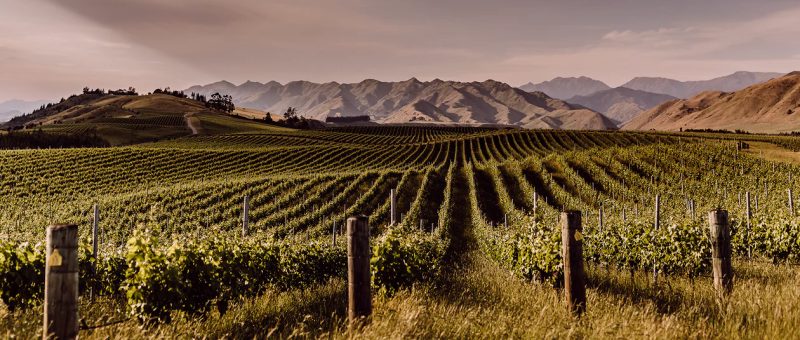
In 1978, Robin and Norman Mundy planted St Helena vineyard at Belfast, on the northern edge of Christchurch. It was Canterbury’s first commercial vineyard, the moment the experiment left the research block and became a business with a name and an address.
Belfast is not a place anyone would have circled on a map of promising wine country. It sat on the flat ground north of the city, unremarkable by the standards of the picturesque vineyards that came later in the Waipara hills. But the Mundys were not chasing a view. They were testing whether the Lincoln findings held up when real money and a real crop were on the line.
Schuster came on as St Helena’s winemaker, which closed the loop neatly: the practitioner from the research project now making wine from Canterbury’s first proper commercial planting.
The proof arrived in 1982. St Helena’s Pinot Noir won a gold medal at the Air New Zealand Wine Competition, Canterbury’s first gold and a genuine landmark, not just for the region but for New Zealand Pinot Noir as a whole.
It is worth being clear about what that medal meant. Until then, New Zealand Pinot Noir was a hopeful idea more than an established style. A gold from a Canterbury vineyard, on flat ground at Belfast, from vines barely old enough to crop, said the cool-climate theory was not just sound in a research paper. It was in the bottle. The grant, the trials, the Czech winemaker, the brothers with their nerve: all of it landed in a single result that the rest of the country could taste.
St Helena did not last. The vineyard that started it all eventually wound down and closed around 2011, and Canterbury’s founding commercial label is now part of the region’s history rather than its present. That is worth saying plainly, because the temptation in a story like this is to imply the pioneer is still going strong. It is not.
There is no shame in that ending. St Helena did the hard, early work and proved the point that mattered. Plenty of industries are built on the shoulders of a first mover that does not survive to enjoy the result. The vines at Belfast settled a question, and once a question is settled the answer outlives the people who first asked it.
Everything that followed, the wineries that now cluster through Waipara and out across the Canterbury plains, rests on what was established between 1973 and 1982. The cool-climate case for Canterbury was made by a researcher, a winemaker and two brothers before most of today’s producers had planted a single vine.
The modern picture is documented well by the industry body, and the North Canterbury wine region is now recognised for exactly the styles those early trials pointed toward: Pinot Noir, Riesling and Chardonnay grown on the long, cool autumns that once looked like a liability.
It is easy, standing at a Waipara cellar door now, to take all of this as given. The honest version is that none of it was given. It was tested, doubted, planted, and finally proved, starting with a five-hundred-dollar grant and a question nobody had bothered to ask.
Walk into a Waipara cellar door today and the cool-climate case for Canterbury feels obvious, almost inevitable. It was not. It was a question first, then a trial, then a gamble at Belfast, then a single gold medal in 1982 that put the answer beyond doubt. The pioneer is gone, but the region it proved possible is still pouring the wine it predicted.
Sophie Renwick
Wine Adventure
4 Comments
Always assumed Canterbury wine started up in the Waipara hills, so the bit about St Helena being out at Belfast on flat ground threw me a bit. Drove past there for years and had no idea that was where it all kicked off.
Didn’t realise St Helena had actually closed. Is there anything left to see at the Belfast site or is it all gone now? Would be a decent little pilgrimage given the 1982 gold.
Pretty sure it’s housing and the like out that way now, mate. The vineyard wound up years back. The story’s still worth knowing though, that gold medal was a proper turning point for NZ pinot.
Good to see Jackson getting his due. So much of the marketing round here makes it sound like the wineries that are still going were the first, when really it was the research at Lincoln and then the Mundys taking the risk. Five hundred dollars to settle the whole question is a great detail.