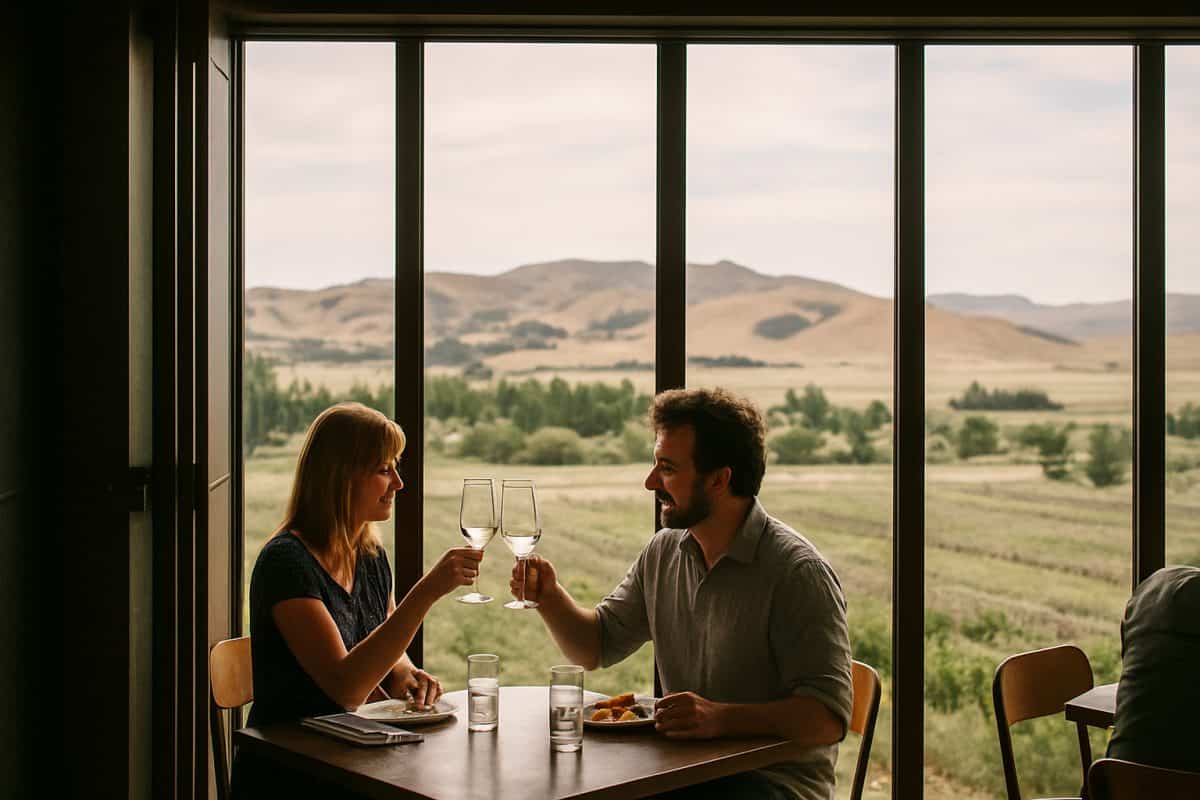
Most people visit Waipara Valley by pulling into whichever cellar door they see first from the highway. It works, technically. You taste wine, you buy a bottle, you drive home. But there is a better way to do it — a route that visits four cellar doors in a specific order, starting with the lightest wines and building toward the boldest, so your palate gets the full story instead of the abridged version. We have tested this route multiple times, adjusted the timing, argued about the lunch options, and sorted out the designated driver logistics that every wine guide conveniently ignores. Here is the version that works.
Every wine region has a natural sequence, though most visitors ignore it entirely. You pull into whichever cellar door appears first on the highway and start tasting whatever they pour. In Waipara, this usually means beginning with a full-bodied Pinot Noir or a Syrah that coats your palate before you have given your lighter wines a fair chance.
The logic is simple. Start with aromatic whites — Riesling, Pinot Gris — where the subtle floral and citrus notes need a fresh palate to register properly. Move through richer whites and lighter reds. Finish with the wines that have weight, tannin, and intensity. Your palate builds tolerance through the morning, and each stop rewards you with something your mouth is ready for.
This is not snobbery. It is the same reason you would not eat a curry before tasting a delicate broth. The four cellar doors on this route happen to sit in almost perfect geographical order for this palate progression, which is either excellent planning by Canterbury’s wine pioneers or a happy accident. We suspect the latter.
We know because we did it. Our first Waipara trip started at a cellar door pouring a bold, peppery Syrah at half past ten in the morning. It was genuinely good wine. But by the time we reached the Riesling two stops later, our palates were wearing sunglasses. The delicate lime blossom and wet stone character that makes Canterbury Riesling distinctive? We could barely taste it. We might as well have been drinking water with a squeeze of lemon.
The other common mistake is starting at Pegasus Bay, which feels natural because it is the most well-known name in the valley. But Pegasus Bay makes wines with real concentration and complexity. Their Pinot Noir is not a warm-up act. It is a headliner. If you taste it first, the lighter wines at your next stop will feel thin by comparison — not because they are thin, but because your palate has been recalibrated.
We have run this route both ways now. Starting light and finishing bold is not just better in theory. It is noticeably, obviously better in practice.

Waipara Hills sits right off State Highway 1, which makes it the obvious first stop and, for this route, the correct one. Their cellar door is relaxed and unhurried even on busy weekends. The staff do not rush you through a tasting flight, which matters when you have three more doors ahead.
Start with their Riesling. The Waipara Hills Riesling is clean, bright, and aromatic without being complicated — exactly what a fresh palate wants first thing in the morning. It has that classic Canterbury lime zest character with just enough residual sweetness to feel welcoming rather than austere. Their Pinot Gris is worth trying alongside it; a little rounder, a touch of pear, still firmly in gentle territory.
Skip the reds here. Not because they are bad, but because you have better reds coming and you want to keep your palate in its lightest gear. This is the one stop where discipline pays off. Twenty-five minutes is enough time to taste three whites, buy a bottle if something grabs you, and get back on the road without feeling rushed. The cellar door opens at ten, and arriving on opening is perfectly fine — you will often have the tasting bar to yourself.
Pegasus Bay is a seven-minute drive from Waipara Hills, and it feels like arriving at a different kind of operation entirely. The grounds are beautiful — mature gardens, a proper restaurant, the sense that this family has been doing this for a long time and intends to keep doing it. They have. The Donaldson family planted their first vines here in 1986, building what Pegasus Bay has become today.
This is where you cross from aromatic whites into wines with genuine substance. Their Chardonnay is exceptional — barrel-fermented, rich but not heavy, with a savoury quality that separates it from the fruit-forward Chardonnays you find further north. If you are tasting their aged Riesling alongside, you will notice how much more weight and complexity it carries compared to what you tried at your first stop. Same grape, same region, completely different conversation.
You will almost certainly buy something here. This is not a criticism. Pegasus Bay makes wines that close the deal in the tasting room because they genuinely deliver. The Pinot Noir is available to taste and worth trying now — your palate has had the white wine warm-up it needed. Allow forty minutes. The cellar door deserves it, and the gardens are worth a slow walk if the Canterbury weather is cooperating.

Most Waipara day trippers stick to the cellar doors visible from the main road, which means Black Estate gets a fraction of the foot traffic it deserves. You need to turn off State Highway 1 and drive up into the hills above the valley floor. The road narrows. You pass a limestone outcrop. And then you arrive at a cellar door with a terrace view that quietly announces this place takes its site seriously.
Black Estate is a certified organic vineyard that farms three distinct sites in the Waipara Valley, each with different soils and aspects. The tasting room sits on the Home Vineyard, perched on a north-facing slope above the river. On a clear day, you can see across the valley to the hills on the other side. It is the kind of view that makes you understand why someone would plant vines here specifically, rather than on the easier, flatter land below.
The wines match the ambition of the setting. This is not a volume operation. Black Estate makes wines that reflect where they are grown, which means they taste different from the valley floor wines you have been drinking. Whether that difference appeals to you is worth discovering for yourself.
The difference between a hillside vineyard and a valley floor vineyard is not abstract in Waipara. You can taste it. The limestone soils on Black Estate’s slopes drain faster and stress the vines differently than the alluvial soils down below. The result is fruit with more concentration and a mineral quality that shows up particularly in their Chardonnay and Pinot Noir.
Their Pinot Noir from the Home Vineyard has a savoury, earthy quality — dried herbs, dark cherry, a fine-grained tannin structure — that feels genuinely different from the rounder, fruit-forward Pinots you will have tasted at your earlier stops. It is the kind of wine that rewards attention. If you are sipping and chatting, you will enjoy it. If you slow down and actually pay attention to what is happening in the glass, it gives you more.
The Chardonnay deserves the same focus. It is leaner and more precise than the Pegasus Bay style, with a streak of acidity that keeps it taut. Some people prefer the richness of Pegasus Bay. Some prefer the tension here. Both positions are defensible. This is the conversation that makes Waipara interesting — the same varieties, grown minutes apart, arriving at genuinely different conclusions.

Greystone is your final cellar door, and by this point your palate is ready for it. This is deliberate. Greystone makes wines with structure, depth, and the kind of intensity that would overwhelm a fresh palate at ten in the morning but feels exactly right approaching midday.
The Greystone Pinot Noir is one of the best in Canterbury — bold enough to stand its ground but still recognisably cool-climate, with dark fruit, spice, and a backbone of tannin that tells you this wine was built to last. Their Syrah, if they are pouring it, is equally compelling: peppery, medium-bodied, with a fragrance that fills the glass.
But the real discovery here might be the less expected wines. Greystone does excellent things with Sauvignon Blanc that taste nothing like Marlborough — textured, complex, fermented with real intention. Ask what they have that surprises people. The cellar door staff at Greystone tend to be knowledgeable and genuinely enthusiastic about the wines, which makes the tasting feel more like a conversation than a transaction. This is the stop where you slow down, because after this you are having lunch and your tasting morning is done.
You have two good lunch options, and the honest answer is that both involve a trade-off. Pegasus Bay has a restaurant on site that serves food designed to pair with their wines. The menu is seasonal, the setting is beautiful, and if you time it right you can loop back there after Greystone and sit down to a proper lunch in the garden. The downside is that you are retracing your route, adding twenty minutes of driving.
The alternative is Amberley. The small town just south of the Waipara Valley has a handful of cafes and eateries that cater to the weekend wine-tasting crowd. The food is simpler but solid, and you are already heading in the right direction for the drive back to Christchurch. The Fed is a reliable choice for a substantial lunch. If you want something lighter, the Amberley bakeries do good pies and sandwiches — honest fuel after a morning of tasting.
Our preference depends on the group. For a special occasion or a couple wanting a longer day, the Pegasus Bay restaurant is worth the detour. For a group of friends who have been tasting since ten and want food now rather than in forty minutes, Amberley wins on pure logistics.
Leave Christchurch by half past nine. This gives you a comfortable arrival at Waipara Hills right on their ten o’clock opening, with no need to rush the motorway drive north. The full route — four cellar doors with tasting time at each — takes roughly three hours from first pour to last, assuming you spend twenty-five minutes at the shorter stops and forty minutes at Pegasus Bay and Greystone.
That puts you at lunch between half twelve and one o’clock, which is exactly where you want to be. Any earlier and you have rushed the tastings. Any later and you are hungry, tired, and less inclined to appreciate that final glass of Greystone Pinot Noir.
The one timing trap is weekends in summer and autumn, when cellar doors can get busy after eleven. Starting at ten means you are ahead of the crowd at every stop. By the time the late risers from Christchurch arrive at Pegasus Bay, you are already up the hill at Black Estate with the terrace to yourself. Weekdays are quieter across the board, but Saturday mornings with an early start are the sweet spot if you want atmosphere without the queue.
The designated driver question is the one nobody wants to answer honestly, so here it is. If your group has four cellar doors and four tastings ahead of them, someone is either not drinking or you need a plan that does not involve everyone driving home on a wing and a prayer.
Option one: a genuine designated driver. This works if the designated driver actually enjoys cellar door visits without drinking. Some people do. They like the scenery, the food, the conversation. Give them the car keys and buy their lunch. If they look miserable by stop three, your plan has failed.
Option two: split the driving and the drinking. One person drives to the first two stops and tastes only at stops three and four. The other person does the reverse. This requires trust, organisation, and the willingness to watch someone else taste a Pegasus Bay Chardonnay while you sip water. It also requires enough time between the last drink and the drive home — two hours minimum, and be honest with yourself about that.
Option three: book a driver. Several operators in Canterbury run wine tour transport from Christchurch to Waipara. It costs more than petrol, but everyone drinks, nobody argues about directions, and you arrive home without stress. For groups of four or more, the per-person cost starts to look reasonable.
Four cellar doors, three hours of tasting, and a lunch that you will have earned. This route through Waipara is not the only way to visit the valley, but it is the one that respects both the wines and your palate. Start light at Waipara Hills, build through Pegasus Bay, discover what the hillside does at Black Estate, and finish with the weight and structure of Greystone. Drive home through the Canterbury plains with a box of bottles on the back seat and the quiet satisfaction of having done it in the right order.
Sophie Renwick
Wine Adventure
Leave a comment