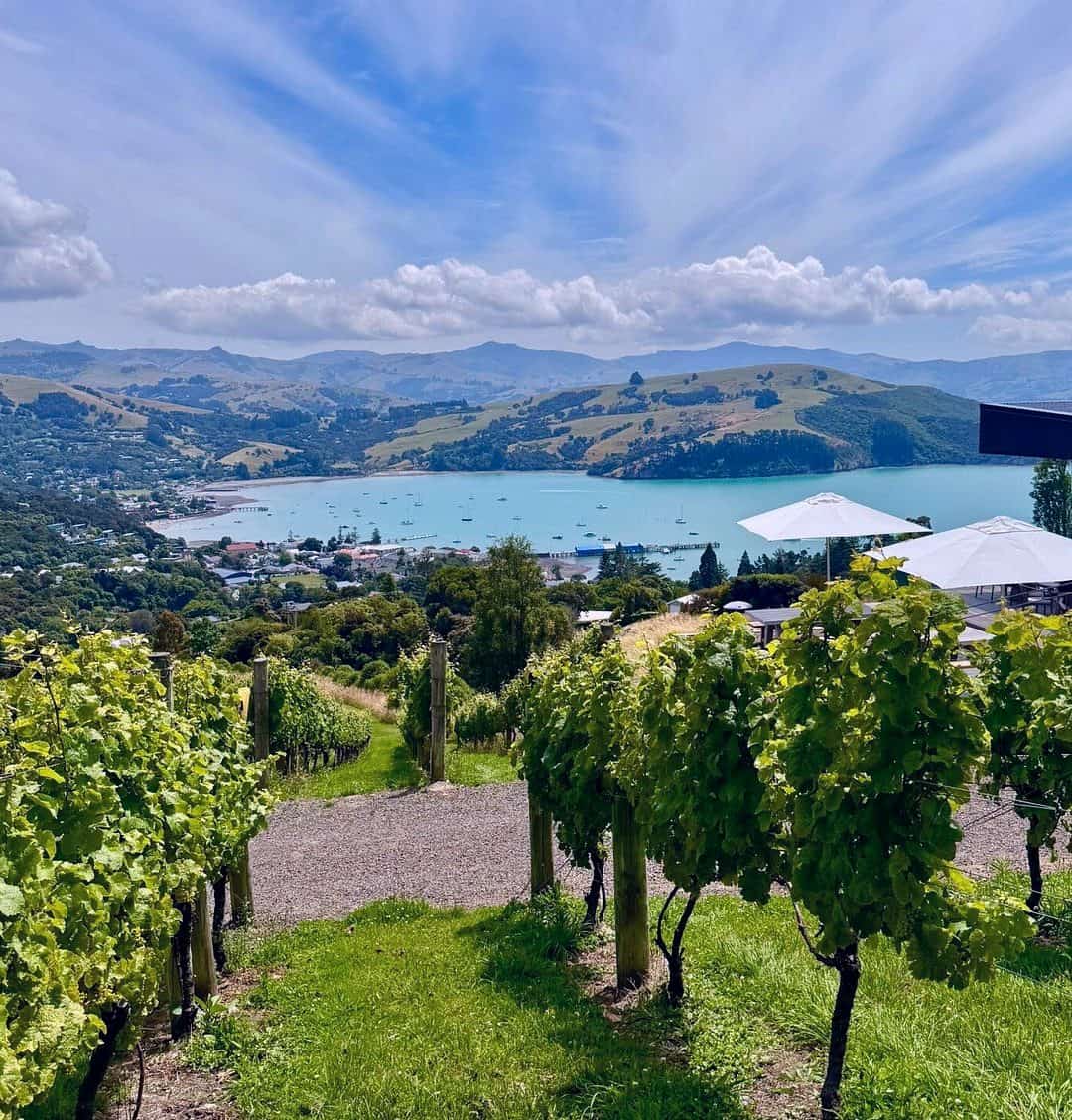
Drive into Akaroa today and the French heritage is a tourism flourish — the street names, the rue this and the rue that, the croissants. Less visible is a stranger inheritance buried in the early 1840s, when the first French settlers are thought to have put grapevines into the ground here, among the earliest plantings anywhere in New Zealand. The vines failed and left almost no record behind. What they left instead is a genuinely open question about where this country’s wine story really starts.
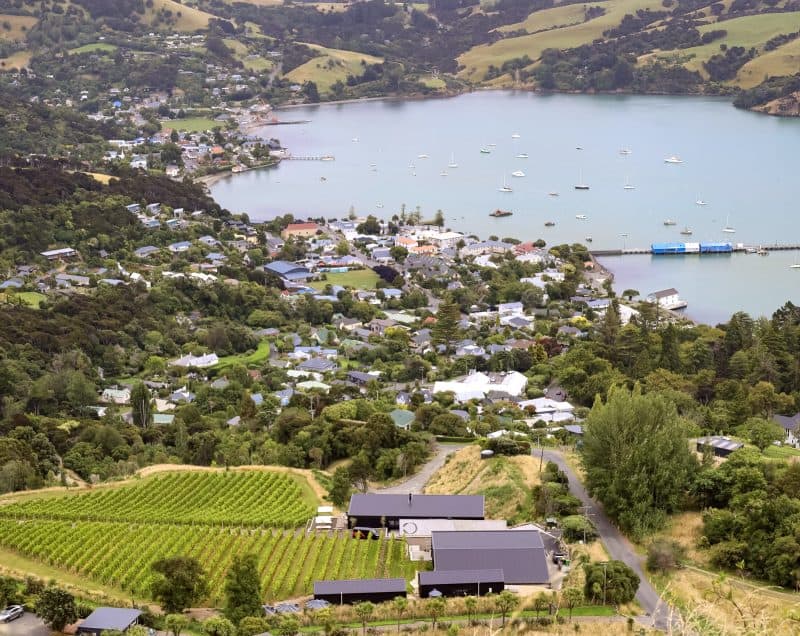
In the late 1830s a whaling captain named Jean Francois Langlois decided that Banks Peninsula ought to be French. He had been working the southern whaling grounds, liked the look of the harbour, and in 1838 secured a deed from local Kai Tahu rangatira that he chose to read as a purchase of most of the peninsula. The deed was thin and the transaction was the kind that did not survive close inspection later, but it was enough to take home and turn into a plan.
Back in France the plan became the Nanto-Bordelaise Company, a venture stitched together by merchants from Nantes and Bordeaux who fancied a colonial foothold in the South Pacific. New Zealand was the open frontier of the moment, and the South Island in particular still looked unclaimed from a distance. The investors were not winemakers or farmers. They were businessmen backing a settlement scheme, and the people they recruited to actually sail south were ordinary French and German families who would bring the habits of home with them. One of those habits, it turns out, was vines.
The ship was the Comte de Paris, a converted whaler that left Rochefort in March 1840 carrying somewhere in the order of sixty emigrants. The crossing was long and rough — a near-capsize off Tasmania, a couple of deaths, a birth — and when the settlers finally reached Akaroa in August they sailed straight into an awkward surprise. Britain had proclaimed sovereignty over New Zealand earlier that year. The French had come to found a colony and arrived to find a British flag already up the harbour.
They settled anyway, and the town they built still wears its origins on the street signs. What interests us here is less the politics than the cargo of ordinary intentions: people setting up a life in a new place, planting gardens, and — because they were French and this was simply what you did — putting in a few vines. Nobody recorded it as a milestone at the time. It was just a family planting grapes. That casual, undocumented quality is exactly why the story is so hard to pin down two centuries later.
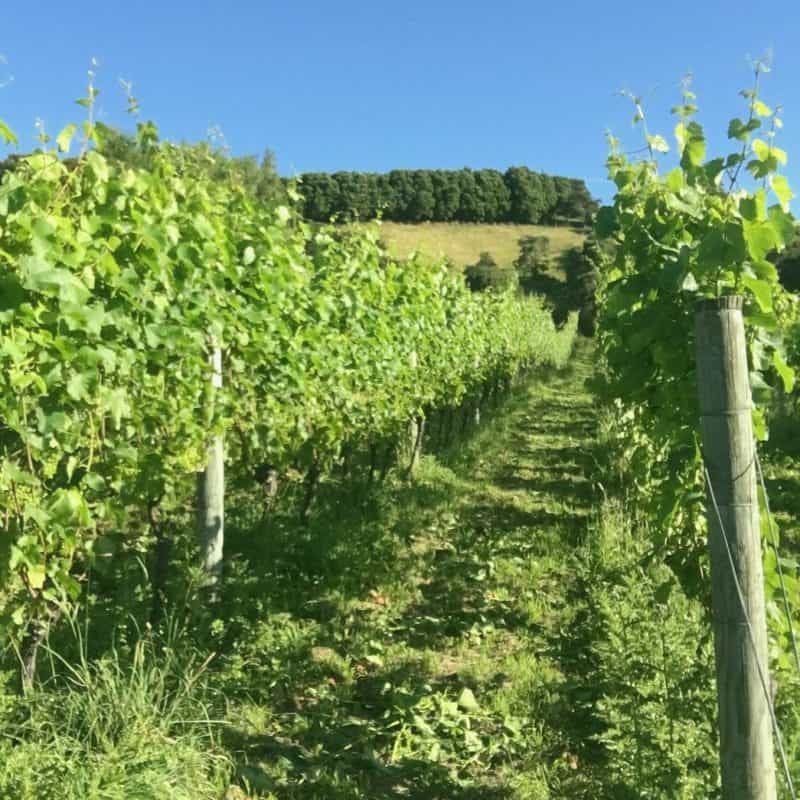
Here is where honesty has to do most of the work. The settlers likely planted vines in the early 1840s, which would put Akaroa among the earliest grape plantings anywhere in New Zealand. But the records are thin, and anyone who tells you the exact year with confidence is filling a gap with a guess.
The grape varieties are murkier still. As far as we can tell, no reliable contemporary account names what went into the ground. It would be reasonable to assume the settlers brought cuttings of whatever was familiar from south-western France, but assuming is not the same as knowing, and we would rather say so plainly than dress a guess up as a fact. The frustrating truth is that the most basic questions — what, exactly, and when, exactly — do not have firm answers. What survives is the shape of the event rather than its detail: French settlers, early 1840s, vines in the ground at Akaroa. Everything finer than that is reconstruction.
The best physical thread back to those first vines is surprisingly small. A set of curved, sickle-shaped pruning knives is said to survive in the Akaroa museum, held to be the tools the French settlers used on their vines. It is a modest object to carry so much weight, but in the absence of planting records or labelled cuttings, a few old blades are close to the most tangible evidence the story has.
We say “said to” and “held to be” deliberately. Provenance on objects like this is rarely airtight, and a pruning knife is a pruning knife whether it trimmed grapevines or roses. Still, there is something fitting about it. The grand colonial scheme failed, the company went broke, the vineyard left almost no paper trail — and what endures is a worn hand tool in a small-town museum. If you want to stand closest to New Zealand’s possible first vines, that display case is where you go.
On paper, Banks Peninsula was not a daft place to try. The harbour basin is sheltered, the summers are warm enough, and the volcanic slopes give you aspect and drainage. A French family looking at those hillsides and thinking vines was not being foolish — they were reading the land the way people from a wine country read land.
But a sensible idea and a working vineyard are separated by a great deal of grief, and that gap is the whole story of early New Zealand wine. The climate that could ripen grapes could also rot them, and the peninsula’s maritime dampness was as much a problem as a gift. It is tempting to draw a straight line from those Akaroa slopes to the cool-climate Pinot Noir and Riesling that Canterbury makes its name on now, and we should resist it. Modern Waipara and the plains owe their success to spray programmes, clonal selection, and a century and a half of accumulated knowledge the Akaroa settlers simply did not have. The instinct was sound. The toolkit was not.
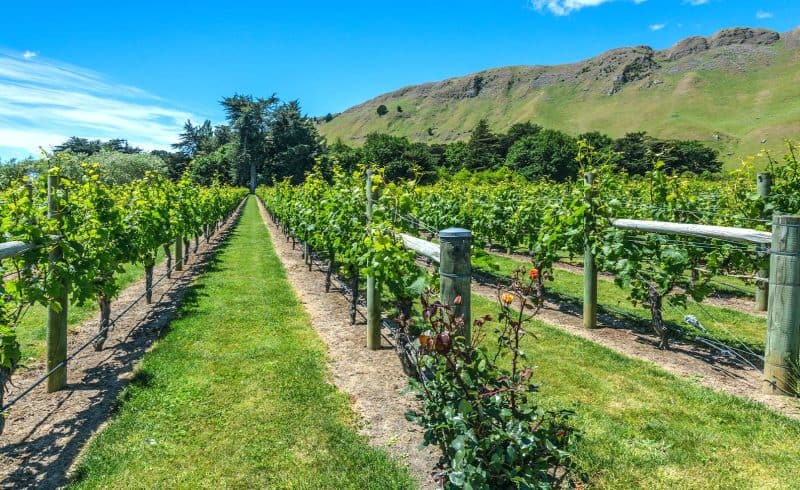
The practical failures were the dull, grinding kind. Powdery mildew is the obvious culprit — it loves a damp maritime climate, it spreads through a vineyard fast, and the settlers had no fungicide to fight it with. A wet Akaroa season would have turned a hopeful row of vines into a grey, dusted mess.
Then there were the birds. A ripening grape is an open invitation, and a small undefended planting with no netting would have been stripped by silvereyes and blackbirds before anyone got near a harvest. Add the ordinary disasters — frost at the wrong moment, vines that sulked in unfamiliar soil, the sheer distance from anyone who knew how to fix the problem — and you have a venture that was quietly losing before it properly began. None of it was dramatic. There was no single killing blow, just a slow accumulation of the things that go wrong when you try to grow a temperamental crop at the edge of the world without backup.
The deeper reason the vines came to nothing is the simplest one: nobody was really in the business of making wine. These were settlers, not vignerons with a commercial plan. The vines were a kitchen-garden habit — a few rows for the household, the way you might plant fruit trees — not the seed of an industry.
There was no market to sell to, no cellar built to age anything, no pressure to scale up from a backyard plot to a producing vineyard. When the grapes failed, the stakes were a disappointing season, not a ruined business, so there was little reason to fight hard for them. Commercial New Zealand wine, when it finally arrived much later, needed all the things Akaroa lacked: people whose living depended on the result, buyers willing to pay, and the stubbornness to keep replanting after each failure. The French at Akaroa had the cuttings and the know-how but none of the commercial drive, and a vineyard without that drive tends to quietly revert to scrub.
This is where the title’s question mark earns its place. Akaroa has a strong claim to early vines, but “first” is genuinely contested. The usual rival is Northland, where the missionary Samuel Marsden is recorded planting vines at Kerikeri in 1819, and where James Busby — later a serious figure in New Zealand wine — was tending vines at Waitangi in the 1830s. On dates alone, the north was there first.
So the honest answer is that Akaroa was early, possibly among the very earliest in the South Island, but probably not the first planting in the country. The records do not settle it cleanly, partly because so much of this happened in gardens rather than ledgers. We could quietly drop the Northland plantings to make Akaroa’s claim look tidier, but that would be the opposite of the point. The interesting truth is the messy one: several scattered, undocumented attempts, none of them obviously “first”, all of them early.
It would be easy to want a verdict — a plaque, a date, a winner. But the open question is the more honest souvenir, and arguably the more interesting one. Akaroa’s vines matter precisely because they are an early, failed, half-documented attempt rather than a triumphant origin story. They tell you how New Zealand wine actually began: not as a grand industry founding but as a scatter of hopeful, doomed little plantings up and down the country.
There is a Canterbury lesson in it too. The region’s modern wine identity is built on patience, cool-climate stubbornness, and a refusal to pretend it is somewhere it is not — and the Akaroa story rhymes with that. A sensible idea, the wrong moment, a long wait for the knowledge to catch up. So we will leave the question where the French left their vines: open, unresolved, and a little bit haunted by what might have been.
We came looking for a tidy origin and found a set of old pruning knives and a lot of honest uncertainty instead. That feels right. The Akaroa vines were a small, doomed, undocumented thing, and pretending otherwise would betray what makes them worth remembering. Next time you are tasting a Waipara Pinot a couple of hours up the road, it is worth a thought: the long road to Canterbury wine may well have started with a French family, a damp hillside, and a harvest the birds got to first.
Sophie Renwick
Wine Adventure
4 Comments
That line about the birds getting the harvest first made me laugh because we lost half our backyard grapes to silvereyes this autumn and we’re only in Cashmere. Can’t imagine doing it with no netting and no spray in a wet Akaroa season.
Lovely piece. I always assumed the French heritage in Akaroa was just the street names and the bakery, never knew about the vines. The bit about the pruning knives in the museum got me – I’ve walked past that display a dozen times and never twigged what they were.
Good of you to keep the Northland plantings in rather than just crowning Akaroa. Marsden at Kerikeri was 1819 wasn’t he, so the dates don’t really stack up for a clean ‘first’. The honest version is more interesting anyway.
Reckon you’re right that it comes down to nobody actually trying to make wine as a business. Kitchen-garden vines were never going to become an industry on their own. Nice to see a wine history piece that admits where the records run out instead of making stuff up.